by Harvey Smith
Creative Director - Midway Austin
My experience with Q/A over the years has been interesting. I started out as a tester in 1993, knowing nothing about software development. I was an enthusiastic video game player, a writer, and open-and-paper RPG fanatic. This list of commandments would have instantly accelerated my learning by a year.
Now, as a creative director, I crave more polish in games relative to everything else, which usually stems from good development and tech practices. Best practices impact gameplay much more than people often acknowledge. Even in cases where development teams are trying something new and ambitious, a fast frame rate, a solid interface, stability and lots of feedback are the real key to enhancing the player's experience.
I especially like number five from this list, about inspiring testers to play creatively. There's always one person on the test team who thinks like that — someone who covers the basic route that 90 percent of mainstream players will take, then tries five or six creative alternatives. After a while, you develop this as an instinct. "Hmm, this front door triggers a scripted door-opening sequence... I wonder what happens if I break the side window and skip the door."
HEARTS ARE MADE FOR BREAKING
Q/A people know that most games can be broken (or will at least expose something that looks silly) if you try hard enough. Citing alt-path problems, then speculating on their likelihood is very useful; sometimes we take things like that and run with them creatively. We might say "If five percent of testers think to try this, what if we bullet-proof it, then make it more attractive or obvious, so that it occurs to maybe 20 percent of players." Working on the DEUS EX games, which were incredibly free-form, this happened a lot. Even working on an FPS like BlackSite, over the last year we've seen lots of cases where testers approach a combat scenario in a way we didn't expect—routes which might be under-supported and cause frustration. In all cases, having great dialogue with Q/A will make the game better.
THE FINAL PUSH
The very concept of "testing" has evolved a lot to include a bunch of best practices for the genre, such as blind usability tests and post production (as a serious phase of development). The game never gets good as fast as it does in the final months, so it pays to invest in post production testing. Ideally you'll finish the game from beginning to end as soon as you can, then spend a ton of time pounding on it, observing new players stumble through it, and looking for opportunities to pay off dramatic moments. Bringing in round after round of people who have never seen BLACKSITE has taught us invaluable lessons about where players get stuck, run out of ammo, get lost, and have the most or least fun. I wish we had three to six more months of that sort of thing — it would make a tremendous difference in the final quality of the game. I think the difference between great and mediocre publishers is the wisdom to invest in the final period of testing and tuning; the discipline to avoid cheating into this phase, even if a game is late.
Friday, November 16, 2007
Thursday, November 08, 2007
Commandments of Quality Assurance
by Chuck McFadden
1. Employ the Scientific Method.
2. Understand the difference between playing a game and testing a game. Spend most of your time doing the latter.
3. Be flexible.
4. Find and report bugs as early as possible.
5. Think like a hacker. Be creative in finding problems with the game.
6. Put in as much effort with your regression testing as you do with your initial testing.
7. Don't let Q/A members test designs they've created.
8. Don't write sloppy bugs. Spell and grammar check everything.
9. Test everything you can reasonably test.
10. Work under the assumption that most (if not all) bugs can be consistently reproduced.
IF Q/A HAD A SET OF 10 COMMANDMENTS, WHAT WOULD THEY BE?
Approximately two years ago, a member of the IGDA's Q/A Special InterestGroup [SIG] posed that very question, which ignited the SIG into lengthy discussions and friendly arguments until, weeks later, we settled on 10. They were compiled and listed on the SIG site, where they have remained in relative obscurity... until now.
This article lists the commandments in no particular order and examines each in detail. Each has equal value; no one commandment is more important thanany other. But ignore them and the god of game development will smite you.
1. EMPLOY THE SCIENTIFIC METHOD.
When you boil it down, this is what separates a good tester froma bad tester: the good tester—consciously or unconsciously—uses the Scientific Method. Make this a part of your Q/A team's training process, just in case one of your testers paid as little attention during science class as this author. If trained well in the Scientific Method, upon observing a bug, a tester will:
a) Observe and describe. At the least, the tester should take notes on what happened. Ideally, your tester is recording everything (with a VCR or digitally), which helps the tester with the next few steps. Either way, this step simply states what happened, for example that the game crashed at the second save point.
b) Formulate a hypothesis. The tester should speculate on what might have caused the bug. Did they try to save when the game was streaming off the disc? Was a character talking when the save action triggered?
Did the character "die" at the sametime the save initialized? Based on the observed behavior, a tester can develop a testable hypothesis to repeat the bug. (An inexperienced or less-thorough tester will end the process here, writing up the bug based on his/her speculation.)
c) Experiment. The hypothesis should then be tested to see if it results in the initially observed behavior/bug. Re-experiment to narrow down the steps to repeat the bug. If the hypothesis is true, move onto the next step. If the hypothesis is false, refer to step A and start again at step B.
d) Draw a conclusion and communicate the results. Once the tester has verified that they can repeat the bug with the minimal number of steps (in other words, once they have verified that the hypothesis is true), they should write it up. How your tester writes up the bug is up to you and your established procedure. Regardless of how they write up the bug, if they use this method, the bug will be solidly researched and consistently reproducible.
2. UNDERSTAND THE DIFFERENCE BETWEEN PLAYING A GAME AND TESTING A GAME. SPEND MOST OF YOUR TIME DOING THE LATTER.
The most common misconception I've seen with new hires (and with industry colleagues who don't know much about Q/A) is they believe testers "play games all day." If this is 100 percenttrue with your Q/A team, you release terribly buggy games. Quality assurance is not just a matter of testing how a game issupposed to work, but how the game is not supposed to work.
The difference is simple. A good tester knows that losingneeds to be tested as thoroughly as winning. He understandsthat getting the best lap time in a racing game is only half thejob. Otherwise, a bug as simple as a crash at the "game over"screen will never come up if the tester is always playing to win.
This commandment also speaks to another philosophy: Don't exclusively hire "hardcore" gamers. While employing hardcore gamers is important, it's equally important to cultivate more casual players. As a lead or manager, you'll be tempted to hire the most dedicated gamers in your neighborhood. Unfortunately those testers invariably have the hardest time losing. Moreover,the more they "test" your game, the less likely they are to lose.You can avoid this problem almost entirely if you write good test plans. But if your tester is also conscious of the difference between playing and testing, he's sure to find bugs beyond the scope of what the average test plan can predict. Occasionally remind your testers that you're paying them to do a job. They can play games on their own time. While they're on the clock,they are there to test.
3. BE FLEXIBLE.
Video games represent a truly collaborative art form. Everyone involved in the game development process needs to work with at least one other person and working with someone else requires flexibility. So, how can Q/A teams be flexible?
Q/A teams are always doing more for their game (and their company) than simply testing the latest build for bugs. This commandment recognizes and encourages that. Be flexible enough to allow your testers to demo their game for the press. Help your marketing and PR teams with screenshots and/or videos. After all, who knows how to avoid all the embarrassing bugs better than the people who found them? The Q/A teamknows the workarounds better than anyone. If your company is flexible enough to allow the Q/A team to help out with this work, the results might be surprising.
Be cautious not to let your Q/A team take on too much work, however. Don't take on so much extra work that you find your team testing less than they should. If your Q/A team ceases to find important bugs, all those screenshots and videos won't amount to much.
Your Q/A team should also be flexible with the bugs they report. As a game nears completion, Q/A will invariably disagree with the production/development team on some of the bugs they want to close out. Be flexible enough to let less important bugs go (all games ship with some bugs, after all), but insist on fixing the bugs that make the biggest difference.
How do you know the difference? If your Q/A team isn't already using some sort of prioritizing scheme in their bug database, get one started. It's as simple as assigning a letter (or number, or both!] to a kind of bug. When it comes time to close out the bugs, it can save you hours upon hours of headaches.
4. FIND AND REPORT BUGS AS EARLY AS POSSIBLE.
This is a tricky one. Q/A is usually employed at the end of the development process, which is absolutely the right way to build a game. This commandment isn't condoning full-blown testing before your alpha milestone. Doing so would only clog the bug database with annoying bugs like "game-has-no-sound."
However, it is helpful to have a lead tester review the save flow( for example) long before it's implemented in the game. If an experienced tester can look at a save flow system design and tell you what will fail a technical requirements checklist, it'll save both the Q/A team and the development team hours or even days of work down the line.
You could also ask a few testers to take a look at the first iterations of your control scheme. Don't tell them how to control the game, just give them the controller and ask them to play around a little. If they can intuitively understand how to interactwith the game, then you know you're on the right track with your controls. If they have problems with certain aspects of the controls, you know what to work on next. This won't give you the feedback you need if you're wondering how intuitive a casual gamer would find your controls, but it's a good place to start.
You can have your lead tester look at the game's text to verify correct usage of naming conventions long before you've implemented the text into the game. These are things they'll test for anyway once the text is in-game, so why not have them look at it before doing difficult implementation?
The save flow, controls, and text check examples are just that, examples. There are many little things an experienced Q/A tester can do for you before the alpha milestone. If you schedule these things out ahead of time, and make sure the tester knows what he/she should not work on, your development team will have more time to work on more important things and the inevitable crunch time will be less ... crunchy.
5. THINK LIKE A HACKER. BE CREATIVE IN FINDING PROBLEMS WITH THE GAME.
It's relatively easy to find a spelling error or a level load bug. The best testers flex their mentality toward the test cases at hand,ranging from a technically skilled hacker to an anti-intuitive four year old. Crash bugs can be found from altering core files and manipulating fifteen different user interface screens (hacker) to smashing your palm on the keyboard and causing a buffer overrun (four year old). And there are plenty of bugs in between.
Hardcore gamers love to bend the game rules as far as possible. Keeping this commandment in mind can help you avoid shipping with those nasty "exploit" bugs found in multiplayer games (both console and PC). But this commandment doesn't just apply to multiplayer. Thinking like a hacker simply means looking for the flaws buried deep in the game, not just on the surface.
Don't only play the game the way you think the average consumer will. Think of ways to play that no one else will. If the main character is supposed to exit a room by using the door, ask your tester to find other ways out of the room. Can the character use the window? Can he jump through the ceiling? Can he walk through a wall? Approaching a seemingly mundane task and finding a creative way through it can result in a lot of surprising bugs.
6. PUT IN AS MUCH EFFORT WITH YOUR REGRESSION TESTING AS YOU DO WITHYOUR INITIAL TESTING [HALO TESTING].
Finding and reporting the initial bug, as well as properly regressing that bug, are two important and essential job responsibilities for every Q/A tester. However, there is a third area of testing that occurs: Halo testing. No, this isn't about the Bungie game. Halo testing is when a tester checks for newly uncovered or added bugs resulting from the fixed bug they are regressing. Successful Halo testing requires the tester to possess Q/A experience (or an innate talent for finding bugs], intimate knowledge of back-end systems, how the product is built or developed, and guidance by the Q/A management team overseeing the title.
Regression testing is more than just reproducing the initially reported issue. When a fix for a bug is checked in there is always a risk associated with that fix. That risk must be evaluated not only by the programmer, designer, or artist but also by the Q/A lead and tester. Ensuring the bug at hand is fixed is only the first step—the tester must then Halo test around that fix looking for new bugs that could have been a result of that fixed bug.
7. DON'T LET Q/A MEMBERS TEST DESIGNS THEY'VE CREATED.
Otherwise known as the conflict of interest commandment, this one can get you in trouble with your ambitious testers. Every tester, at some point, has a brilliant idea. Be very careful when this happens.
It's human nature to be biased against one's own ideas. Therefore, when a tester's suggestion makes it into the game, don't allow her to regress it. By seeing her idea become reality, she cannot effectively Halo test the new feature. She will be lesslikely to observe any bugs resulting from this feature. Get another tester to put the new feature through its paces. This will ensure that the new feature gets the same objective attention as any other.
This commandment does not discourage testers from making the leap to level designer or some other position in the larger organization. Many industry luminaries started their careers in Q/A, and this commandment recognizes that. But it also servesas a reminder to resist allowing your tester's objectivity to be overshadowed by a really good idea.
8. DON'T WRITE SLOPPY BUGS. SPELL AND GRAMMAR CHECK EVERYTHING.
The most effective testers are not those with the highest Gamerscore, but those possessing exceptional written and verbal communication skills. This is because clearly-communicated bugs get fixed faster and better than sloppy, confusing bugs. Moreover, as a group whose fundamental responsibility is to find other people's mistakes, it's simply embarrassing and unprofessional when Q/A's own work is full of errors.
This commandment doesn't insist that every tester hold a Ph.D. in English. Even if your testers lack perfect grammar skills, the least they can do is spell check theirwork. Most bug databases have a spell check function built in. Insist that your testers use it.
9. TEST EVERYTHING YOU CAN REASONABLY TEST.
Don't ignore a feature just because it gives a good first impression. If it's in the game, test it (and test it often) to ensure it works as designed.
For example, upon initially testing the newest gun in a FPS, a tester will notice that it fires correctly, the correct sound plays,it deals the correct amount of damage to the enemy, and it depletes its ammunition according to spec. Oh! And it's really fun to shoot! At this point, your inexperienced tester (having finished the test plan for this gun) may think he's done. He'll move onto the next gun.
But, what if that new gun, when fired at an explosive crate, crashes the game? It seems tedious, but every feature needs to be tested in every reasonable way. That means firing weapons at every interactive target (and most non-interactive targets]. Make sure everything from the smallest decal to the biggest explosion trigger and play correctly, lest you prematurely approve a new feature.
As another example, at some point we've all heard a developer say, "I only fixed X bug. I didn't touch anything else, so don't worry about testing the whole Y feature." An inexperienced tester will take that developer at his word and only test the change as reported. He would miss the bugs that unexpectedly resulted from the change to "X bug."
A good, thorough test plan (one that includes, for example, causing an explosion with every weapon type) can help you avoid this problem, but no test plan can predict every possibility. Your testers need to be aware that they are ultimately responsible for the stability of the game. They need to make sure everything works to spec in every situation. They also need to understand that a "simple change" to a seemingly innocuous feature can have unexpected results. Never settle for spot-checking and don't say you're "done" testing a feature until you're ready to ship it.
10. WORK UNDER THE ASSUMPTION THAT MOST (IF NOT ALL) BUGS CAN BECONSISTENTLY REPRODUCED.
It's only a question of how difficult the bug is to repeat. Even themost "random" bug is repeatable given enough time and effort. Granted, it's not always wise to spend time attempting to consistently repeat an elusive bug, but if you can, it's much easier to fix.
This commandment ties into the first commandment (Scientific Method), but also begs the question: How much time should one spend trying to consistently repeat a bug? You might work under the assumption that every bug is repeatable, but is it advisable to consistently repeat every single bug?
Ask yourself—how important is this bug? If the tester "randomly" crashed the game after beating the first boss, isn't it justified to spend a day attempting to consistently repeat it? On the other hand, if the tester found that the credits scrolled unusually quickly once out of 10 viewings, you probably don't need to research the bug for more than a few minutes.
Consider the severity of the bug when you determine how much time to invest in getting it repeated. You know it can be consistently repeated, but you need to use your judgment to determine if it's worth the effort. If your testers can't get the bug to repeat, list how many times they attempted to against how many times they successfully repeated it (i.e. 1 out of 10 times, the credits scrolled at 5x speed). That way, the development team can address the bug knowing it's not yet consistently repeatable.
A GOLDEN RULE
Summing up these 10 commandments into one all-inclusive statement might look something like this: Test scientifically, creatively, and thoroughly enough to catch all the bugs, but not so obsessively as to jeopardize your ship date.
Whether you follow one golden rule or 10 commandments, Q/A work is as much an art as a science. It's at its best when a diverse team passionately comes together to work on a common goal; to do everything they can to help the development team make the best game possible. Hopefully these commandments can inspire you and your Q/A team to better serve that common goal.
The author acknowledges Rob Thompson,
Q/A manager at Sony OnlineEntertainment for his contributions to this article.
NOVEMBER 2007 GAME DEVELOPER
1. Employ the Scientific Method.
2. Understand the difference between playing a game and testing a game. Spend most of your time doing the latter.
3. Be flexible.
4. Find and report bugs as early as possible.
5. Think like a hacker. Be creative in finding problems with the game.
6. Put in as much effort with your regression testing as you do with your initial testing.
7. Don't let Q/A members test designs they've created.
8. Don't write sloppy bugs. Spell and grammar check everything.
9. Test everything you can reasonably test.
10. Work under the assumption that most (if not all) bugs can be consistently reproduced.
IF Q/A HAD A SET OF 10 COMMANDMENTS, WHAT WOULD THEY BE?
Approximately two years ago, a member of the IGDA's Q/A Special InterestGroup [SIG] posed that very question, which ignited the SIG into lengthy discussions and friendly arguments until, weeks later, we settled on 10. They were compiled and listed on the SIG site, where they have remained in relative obscurity... until now.
This article lists the commandments in no particular order and examines each in detail. Each has equal value; no one commandment is more important thanany other. But ignore them and the god of game development will smite you.
1. EMPLOY THE SCIENTIFIC METHOD.
When you boil it down, this is what separates a good tester froma bad tester: the good tester—consciously or unconsciously—uses the Scientific Method. Make this a part of your Q/A team's training process, just in case one of your testers paid as little attention during science class as this author. If trained well in the Scientific Method, upon observing a bug, a tester will:
a) Observe and describe. At the least, the tester should take notes on what happened. Ideally, your tester is recording everything (with a VCR or digitally), which helps the tester with the next few steps. Either way, this step simply states what happened, for example that the game crashed at the second save point.
b) Formulate a hypothesis. The tester should speculate on what might have caused the bug. Did they try to save when the game was streaming off the disc? Was a character talking when the save action triggered?
Did the character "die" at the sametime the save initialized? Based on the observed behavior, a tester can develop a testable hypothesis to repeat the bug. (An inexperienced or less-thorough tester will end the process here, writing up the bug based on his/her speculation.)
c) Experiment. The hypothesis should then be tested to see if it results in the initially observed behavior/bug. Re-experiment to narrow down the steps to repeat the bug. If the hypothesis is true, move onto the next step. If the hypothesis is false, refer to step A and start again at step B.
d) Draw a conclusion and communicate the results. Once the tester has verified that they can repeat the bug with the minimal number of steps (in other words, once they have verified that the hypothesis is true), they should write it up. How your tester writes up the bug is up to you and your established procedure. Regardless of how they write up the bug, if they use this method, the bug will be solidly researched and consistently reproducible.
2. UNDERSTAND THE DIFFERENCE BETWEEN PLAYING A GAME AND TESTING A GAME. SPEND MOST OF YOUR TIME DOING THE LATTER.
The most common misconception I've seen with new hires (and with industry colleagues who don't know much about Q/A) is they believe testers "play games all day." If this is 100 percenttrue with your Q/A team, you release terribly buggy games. Quality assurance is not just a matter of testing how a game issupposed to work, but how the game is not supposed to work.
The difference is simple. A good tester knows that losingneeds to be tested as thoroughly as winning. He understandsthat getting the best lap time in a racing game is only half thejob. Otherwise, a bug as simple as a crash at the "game over"screen will never come up if the tester is always playing to win.
This commandment also speaks to another philosophy: Don't exclusively hire "hardcore" gamers. While employing hardcore gamers is important, it's equally important to cultivate more casual players. As a lead or manager, you'll be tempted to hire the most dedicated gamers in your neighborhood. Unfortunately those testers invariably have the hardest time losing. Moreover,the more they "test" your game, the less likely they are to lose.You can avoid this problem almost entirely if you write good test plans. But if your tester is also conscious of the difference between playing and testing, he's sure to find bugs beyond the scope of what the average test plan can predict. Occasionally remind your testers that you're paying them to do a job. They can play games on their own time. While they're on the clock,they are there to test.
3. BE FLEXIBLE.
Video games represent a truly collaborative art form. Everyone involved in the game development process needs to work with at least one other person and working with someone else requires flexibility. So, how can Q/A teams be flexible?
Q/A teams are always doing more for their game (and their company) than simply testing the latest build for bugs. This commandment recognizes and encourages that. Be flexible enough to allow your testers to demo their game for the press. Help your marketing and PR teams with screenshots and/or videos. After all, who knows how to avoid all the embarrassing bugs better than the people who found them? The Q/A teamknows the workarounds better than anyone. If your company is flexible enough to allow the Q/A team to help out with this work, the results might be surprising.
Be cautious not to let your Q/A team take on too much work, however. Don't take on so much extra work that you find your team testing less than they should. If your Q/A team ceases to find important bugs, all those screenshots and videos won't amount to much.
Your Q/A team should also be flexible with the bugs they report. As a game nears completion, Q/A will invariably disagree with the production/development team on some of the bugs they want to close out. Be flexible enough to let less important bugs go (all games ship with some bugs, after all), but insist on fixing the bugs that make the biggest difference.
How do you know the difference? If your Q/A team isn't already using some sort of prioritizing scheme in their bug database, get one started. It's as simple as assigning a letter (or number, or both!] to a kind of bug. When it comes time to close out the bugs, it can save you hours upon hours of headaches.
4. FIND AND REPORT BUGS AS EARLY AS POSSIBLE.
This is a tricky one. Q/A is usually employed at the end of the development process, which is absolutely the right way to build a game. This commandment isn't condoning full-blown testing before your alpha milestone. Doing so would only clog the bug database with annoying bugs like "game-has-no-sound."
However, it is helpful to have a lead tester review the save flow( for example) long before it's implemented in the game. If an experienced tester can look at a save flow system design and tell you what will fail a technical requirements checklist, it'll save both the Q/A team and the development team hours or even days of work down the line.
You could also ask a few testers to take a look at the first iterations of your control scheme. Don't tell them how to control the game, just give them the controller and ask them to play around a little. If they can intuitively understand how to interactwith the game, then you know you're on the right track with your controls. If they have problems with certain aspects of the controls, you know what to work on next. This won't give you the feedback you need if you're wondering how intuitive a casual gamer would find your controls, but it's a good place to start.
You can have your lead tester look at the game's text to verify correct usage of naming conventions long before you've implemented the text into the game. These are things they'll test for anyway once the text is in-game, so why not have them look at it before doing difficult implementation?
The save flow, controls, and text check examples are just that, examples. There are many little things an experienced Q/A tester can do for you before the alpha milestone. If you schedule these things out ahead of time, and make sure the tester knows what he/she should not work on, your development team will have more time to work on more important things and the inevitable crunch time will be less ... crunchy.
5. THINK LIKE A HACKER. BE CREATIVE IN FINDING PROBLEMS WITH THE GAME.
It's relatively easy to find a spelling error or a level load bug. The best testers flex their mentality toward the test cases at hand,ranging from a technically skilled hacker to an anti-intuitive four year old. Crash bugs can be found from altering core files and manipulating fifteen different user interface screens (hacker) to smashing your palm on the keyboard and causing a buffer overrun (four year old). And there are plenty of bugs in between.
Hardcore gamers love to bend the game rules as far as possible. Keeping this commandment in mind can help you avoid shipping with those nasty "exploit" bugs found in multiplayer games (both console and PC). But this commandment doesn't just apply to multiplayer. Thinking like a hacker simply means looking for the flaws buried deep in the game, not just on the surface.
Don't only play the game the way you think the average consumer will. Think of ways to play that no one else will. If the main character is supposed to exit a room by using the door, ask your tester to find other ways out of the room. Can the character use the window? Can he jump through the ceiling? Can he walk through a wall? Approaching a seemingly mundane task and finding a creative way through it can result in a lot of surprising bugs.
6. PUT IN AS MUCH EFFORT WITH YOUR REGRESSION TESTING AS YOU DO WITHYOUR INITIAL TESTING [HALO TESTING].
Finding and reporting the initial bug, as well as properly regressing that bug, are two important and essential job responsibilities for every Q/A tester. However, there is a third area of testing that occurs: Halo testing. No, this isn't about the Bungie game. Halo testing is when a tester checks for newly uncovered or added bugs resulting from the fixed bug they are regressing. Successful Halo testing requires the tester to possess Q/A experience (or an innate talent for finding bugs], intimate knowledge of back-end systems, how the product is built or developed, and guidance by the Q/A management team overseeing the title.
Regression testing is more than just reproducing the initially reported issue. When a fix for a bug is checked in there is always a risk associated with that fix. That risk must be evaluated not only by the programmer, designer, or artist but also by the Q/A lead and tester. Ensuring the bug at hand is fixed is only the first step—the tester must then Halo test around that fix looking for new bugs that could have been a result of that fixed bug.
7. DON'T LET Q/A MEMBERS TEST DESIGNS THEY'VE CREATED.
Otherwise known as the conflict of interest commandment, this one can get you in trouble with your ambitious testers. Every tester, at some point, has a brilliant idea. Be very careful when this happens.
It's human nature to be biased against one's own ideas. Therefore, when a tester's suggestion makes it into the game, don't allow her to regress it. By seeing her idea become reality, she cannot effectively Halo test the new feature. She will be lesslikely to observe any bugs resulting from this feature. Get another tester to put the new feature through its paces. This will ensure that the new feature gets the same objective attention as any other.
This commandment does not discourage testers from making the leap to level designer or some other position in the larger organization. Many industry luminaries started their careers in Q/A, and this commandment recognizes that. But it also servesas a reminder to resist allowing your tester's objectivity to be overshadowed by a really good idea.
8. DON'T WRITE SLOPPY BUGS. SPELL AND GRAMMAR CHECK EVERYTHING.
The most effective testers are not those with the highest Gamerscore, but those possessing exceptional written and verbal communication skills. This is because clearly-communicated bugs get fixed faster and better than sloppy, confusing bugs. Moreover, as a group whose fundamental responsibility is to find other people's mistakes, it's simply embarrassing and unprofessional when Q/A's own work is full of errors.
This commandment doesn't insist that every tester hold a Ph.D. in English. Even if your testers lack perfect grammar skills, the least they can do is spell check theirwork. Most bug databases have a spell check function built in. Insist that your testers use it.
9. TEST EVERYTHING YOU CAN REASONABLY TEST.
Don't ignore a feature just because it gives a good first impression. If it's in the game, test it (and test it often) to ensure it works as designed.
For example, upon initially testing the newest gun in a FPS, a tester will notice that it fires correctly, the correct sound plays,it deals the correct amount of damage to the enemy, and it depletes its ammunition according to spec. Oh! And it's really fun to shoot! At this point, your inexperienced tester (having finished the test plan for this gun) may think he's done. He'll move onto the next gun.
But, what if that new gun, when fired at an explosive crate, crashes the game? It seems tedious, but every feature needs to be tested in every reasonable way. That means firing weapons at every interactive target (and most non-interactive targets]. Make sure everything from the smallest decal to the biggest explosion trigger and play correctly, lest you prematurely approve a new feature.
As another example, at some point we've all heard a developer say, "I only fixed X bug. I didn't touch anything else, so don't worry about testing the whole Y feature." An inexperienced tester will take that developer at his word and only test the change as reported. He would miss the bugs that unexpectedly resulted from the change to "X bug."
A good, thorough test plan (one that includes, for example, causing an explosion with every weapon type) can help you avoid this problem, but no test plan can predict every possibility. Your testers need to be aware that they are ultimately responsible for the stability of the game. They need to make sure everything works to spec in every situation. They also need to understand that a "simple change" to a seemingly innocuous feature can have unexpected results. Never settle for spot-checking and don't say you're "done" testing a feature until you're ready to ship it.
10. WORK UNDER THE ASSUMPTION THAT MOST (IF NOT ALL) BUGS CAN BECONSISTENTLY REPRODUCED.
It's only a question of how difficult the bug is to repeat. Even themost "random" bug is repeatable given enough time and effort. Granted, it's not always wise to spend time attempting to consistently repeat an elusive bug, but if you can, it's much easier to fix.
This commandment ties into the first commandment (Scientific Method), but also begs the question: How much time should one spend trying to consistently repeat a bug? You might work under the assumption that every bug is repeatable, but is it advisable to consistently repeat every single bug?
Ask yourself—how important is this bug? If the tester "randomly" crashed the game after beating the first boss, isn't it justified to spend a day attempting to consistently repeat it? On the other hand, if the tester found that the credits scrolled unusually quickly once out of 10 viewings, you probably don't need to research the bug for more than a few minutes.
Consider the severity of the bug when you determine how much time to invest in getting it repeated. You know it can be consistently repeated, but you need to use your judgment to determine if it's worth the effort. If your testers can't get the bug to repeat, list how many times they attempted to against how many times they successfully repeated it (i.e. 1 out of 10 times, the credits scrolled at 5x speed). That way, the development team can address the bug knowing it's not yet consistently repeatable.
A GOLDEN RULE
Summing up these 10 commandments into one all-inclusive statement might look something like this: Test scientifically, creatively, and thoroughly enough to catch all the bugs, but not so obsessively as to jeopardize your ship date.
Whether you follow one golden rule or 10 commandments, Q/A work is as much an art as a science. It's at its best when a diverse team passionately comes together to work on a common goal; to do everything they can to help the development team make the best game possible. Hopefully these commandments can inspire you and your Q/A team to better serve that common goal.
The author acknowledges Rob Thompson,
Q/A manager at Sony OnlineEntertainment for his contributions to this article.
NOVEMBER 2007 GAME DEVELOPER
Friday, November 02, 2007
If in case you don't know the reasons why US troops can't leave Iraq
Here is my list:
1. Maintain the flow of oil and gas in the region.
2. Prevent the estabishment of an Al Qaeda safe haven.
3. Contain Iranian influence.
4. Prevent a regional war.
5. Maintain American military credibility in the region.
6. Prevent a humanitarian catastophe on the scale of Rwanda
1. Maintain the flow of oil and gas in the region.
2. Prevent the estabishment of an Al Qaeda safe haven.
3. Contain Iranian influence.
4. Prevent a regional war.
5. Maintain American military credibility in the region.
6. Prevent a humanitarian catastophe on the scale of Rwanda
Saturday, October 06, 2007
Disparities
by Steve Coll
Just over a year ago, during a high-school assembly in Jena, Louisiana, a black student asked the school’s white principal if it would be all right to sit under an oak tree outside, an oasis of shade known as the “white tree,” because only Caucasian students congregated there. The principal said that the young man could sit where he liked. Later, the student and some African-American friends walked over to the oak and chatted with some white schoolmates. The next day, somebody fixed two nooses to the tree’s branches.
The ropes inaugurated a narrative of conflict and small-town justice in the Deep South known today as the case of the Jena Six, a story populated by a disconcerting number of stock characters from the late Jim Crow era. Its origins signalled a theatrical quality that a swelling cast, including the Reverend Al Sharpton, has managed to sustain; an Off Broadway production (backlit oak tree, gentle wind machines, soliloquies about past and present) seems inevitable.
Although some of the evidence in the Jena case is murky, a cumulative verdict of racial double standards lies beyond reasonable doubt. Between Reconstruction and the end of the Second World War, more than two hundred and fifty people in Louisiana, the great majority of them African-Americans, were lynched. Jena’s recent noosemakers, identified as a trio of white students, were recommended for expulsion by the principal, who was evidently conscious of this history, but a white school superintendent imposed suspensions only, on the ground that the tree display was a prank. In the days leading up to that decision, fights had erupted between black and white students, and the local district attorney, Reed Walters, reportedly gave a speech in which he warned students, “With a stroke of my pen, I can make your lives disappear.”
Last December, at the school, a black student coldcocked a white student, Justin Barker, knocking him briefly unconscious; other black students allegedly kicked the victim while he lay on the ground. Barker was treated for cuts and bruises at a hospital and released a few hours later. The police arrested six black students, aged fourteen to eighteen, and Walters charged them with attempted second-degree murder and a conspiracy count; if convicted, they faced up to seventy-five years in prison.
Jena prosecutors started reducing the charges to aggravated second-degree battery and conspiracy. Still, last June an all-white jury convicted one of the defendants, Mychal Bell, who was sixteen years old at the time of the assault, of crimes that threatened him with up to twenty-two years in an adult state prison. Michael Baisden, a black syndicated radio talk-show host who normally specializes in romance and its perils, undertook an on-air protest, along with others, which spread across black radio and then to the Internet. In late September, thousands of demonstrators descended on Jena. Last Thursday, Bell, whose convictions had been thrown out, was released on bail, after ten months in jail; Reed Walters has agreed to retry him as a juvenile.
Last week, in the Times, Walters defended his work; he described himself as just “a lawyer obligated to enforce the laws of my state.” A devotion to the sanctity of statutes is, of course, essential in a nation governed by laws, but equally important is the exercise of prosecutorial discretion, derived from an intuitive commitment to fairness and common sense. If Walters had possessed a modest measure of such judgment, he might have rescued himself and the town of Jena from notoriety many months ago.
His bullheadedness, however, does not explain why Jena’s narrative has resonated so broadly. Many African-Americans understand the case not only as the civil-rights era redux but as a stark illustration of a here-and-now problem, one about which whites are mainly silent: the mass incarceration of black youths—America’s “school-to-prison pipeline,” as some scholars have christened it.
The number of blacks in prison has quadrupled since 1980. There are many overlapping causes, among them severe automated federal sentencing rules; a passionate but badly managed “war on drugs” prosecuted most heavily in African-American neighborhoods; and deepening inequalities in personal income and access to education, whose effects fall hardest on urban teen-agers. One study estimates that, if recent trends continue, a third of the black males born in 2001 can expect to do time.
The state of Louisiana, true to its reputation for rococo extremism in all matters political, locks up in prison a higher percentage of its population—black, white, and all other races combined—than any other state in the nation. It might be of some comfort to politicians, then, if the Jena case, like the disgraceful treatment of displaced African-American victims of Hurricane Katrina, could be rationalized as an isolated, swamp-inspired exception to a more temperate American norm.
The opposite is true, however. In July, the Sentencing Project, a research and advocacy group, released a state-by-state study of prison populations that identified where blacks endured the highest rates of incarceration. The top four states were South Dakota, Wisconsin, Iowa, and Vermont; the top ten included Utah, Montana, and Colorado—not places renowned for their African-American subcultures. In the United States today, driving while black—or shoplifting while black, or taking illegal drugs, or hitting schoolmates—often carries the greatest risk of incarceration, in comparison to the risk faced by whites, in states where people of color are rare, including a few states that are liberal, prosperous, and not a little self-satisfied. Ex-slave states that are relatively poor and have large African-American populations, such as Louisiana, display less racial disparity.
Discrimination in the American justice system is not only a Deep South thing; it is a national embarrassment. Tocqueville, who initially came to America to study its penal system, might wonder how a democracy can so earnestly debate the justice of detaining foreign nationals at Guantánamo while displaying not a whiff of discomfort about the record number of its own citizens—now more than two million—stuffed into jails and prisons, or about the causes of racial disparity in this forgotten population. America’s predominant response to racism, of course, has long been denial. In Jena, the town fathers effected a vivid evasion. Their problem, they concluded, was not themselves but their tree: they cut down the offending oak and hauled it away.
Just over a year ago, during a high-school assembly in Jena, Louisiana, a black student asked the school’s white principal if it would be all right to sit under an oak tree outside, an oasis of shade known as the “white tree,” because only Caucasian students congregated there. The principal said that the young man could sit where he liked. Later, the student and some African-American friends walked over to the oak and chatted with some white schoolmates. The next day, somebody fixed two nooses to the tree’s branches.
The ropes inaugurated a narrative of conflict and small-town justice in the Deep South known today as the case of the Jena Six, a story populated by a disconcerting number of stock characters from the late Jim Crow era. Its origins signalled a theatrical quality that a swelling cast, including the Reverend Al Sharpton, has managed to sustain; an Off Broadway production (backlit oak tree, gentle wind machines, soliloquies about past and present) seems inevitable.
Although some of the evidence in the Jena case is murky, a cumulative verdict of racial double standards lies beyond reasonable doubt. Between Reconstruction and the end of the Second World War, more than two hundred and fifty people in Louisiana, the great majority of them African-Americans, were lynched. Jena’s recent noosemakers, identified as a trio of white students, were recommended for expulsion by the principal, who was evidently conscious of this history, but a white school superintendent imposed suspensions only, on the ground that the tree display was a prank. In the days leading up to that decision, fights had erupted between black and white students, and the local district attorney, Reed Walters, reportedly gave a speech in which he warned students, “With a stroke of my pen, I can make your lives disappear.”
Last December, at the school, a black student coldcocked a white student, Justin Barker, knocking him briefly unconscious; other black students allegedly kicked the victim while he lay on the ground. Barker was treated for cuts and bruises at a hospital and released a few hours later. The police arrested six black students, aged fourteen to eighteen, and Walters charged them with attempted second-degree murder and a conspiracy count; if convicted, they faced up to seventy-five years in prison.
Jena prosecutors started reducing the charges to aggravated second-degree battery and conspiracy. Still, last June an all-white jury convicted one of the defendants, Mychal Bell, who was sixteen years old at the time of the assault, of crimes that threatened him with up to twenty-two years in an adult state prison. Michael Baisden, a black syndicated radio talk-show host who normally specializes in romance and its perils, undertook an on-air protest, along with others, which spread across black radio and then to the Internet. In late September, thousands of demonstrators descended on Jena. Last Thursday, Bell, whose convictions had been thrown out, was released on bail, after ten months in jail; Reed Walters has agreed to retry him as a juvenile.
Last week, in the Times, Walters defended his work; he described himself as just “a lawyer obligated to enforce the laws of my state.” A devotion to the sanctity of statutes is, of course, essential in a nation governed by laws, but equally important is the exercise of prosecutorial discretion, derived from an intuitive commitment to fairness and common sense. If Walters had possessed a modest measure of such judgment, he might have rescued himself and the town of Jena from notoriety many months ago.
His bullheadedness, however, does not explain why Jena’s narrative has resonated so broadly. Many African-Americans understand the case not only as the civil-rights era redux but as a stark illustration of a here-and-now problem, one about which whites are mainly silent: the mass incarceration of black youths—America’s “school-to-prison pipeline,” as some scholars have christened it.
The number of blacks in prison has quadrupled since 1980. There are many overlapping causes, among them severe automated federal sentencing rules; a passionate but badly managed “war on drugs” prosecuted most heavily in African-American neighborhoods; and deepening inequalities in personal income and access to education, whose effects fall hardest on urban teen-agers. One study estimates that, if recent trends continue, a third of the black males born in 2001 can expect to do time.
The state of Louisiana, true to its reputation for rococo extremism in all matters political, locks up in prison a higher percentage of its population—black, white, and all other races combined—than any other state in the nation. It might be of some comfort to politicians, then, if the Jena case, like the disgraceful treatment of displaced African-American victims of Hurricane Katrina, could be rationalized as an isolated, swamp-inspired exception to a more temperate American norm.
The opposite is true, however. In July, the Sentencing Project, a research and advocacy group, released a state-by-state study of prison populations that identified where blacks endured the highest rates of incarceration. The top four states were South Dakota, Wisconsin, Iowa, and Vermont; the top ten included Utah, Montana, and Colorado—not places renowned for their African-American subcultures. In the United States today, driving while black—or shoplifting while black, or taking illegal drugs, or hitting schoolmates—often carries the greatest risk of incarceration, in comparison to the risk faced by whites, in states where people of color are rare, including a few states that are liberal, prosperous, and not a little self-satisfied. Ex-slave states that are relatively poor and have large African-American populations, such as Louisiana, display less racial disparity.
Discrimination in the American justice system is not only a Deep South thing; it is a national embarrassment. Tocqueville, who initially came to America to study its penal system, might wonder how a democracy can so earnestly debate the justice of detaining foreign nationals at Guantánamo while displaying not a whiff of discomfort about the record number of its own citizens—now more than two million—stuffed into jails and prisons, or about the causes of racial disparity in this forgotten population. America’s predominant response to racism, of course, has long been denial. In Jena, the town fathers effected a vivid evasion. Their problem, they concluded, was not themselves but their tree: they cut down the offending oak and hauled it away.
Wednesday, September 12, 2007
excerpt from "The Emperor of Ocean Park"
by Stephen L. Carter
So now it is my turn to be offended… on behalf of the race: my vision is suddenly overlaid with bright splotches of red, a thing that happens from time to time when my connection to the darker nation and its oppression is most powerfully stimulated. The room fades around me. Through the red curtain, I still see, albeit dimly, these ambitious black kids in their ambitious little suits… vying for the favor of my brother-in-law because he is a managing director a Goldman Sachs, and I suddenly understand the passion of the many black nationalists of the sixties who opposed affirmative action, warning that it would strip the community of the best among its potential leaders, sending them off to the most prestigious colleges, and turning them into… well, into young corporate apparatchiks in Brooks Brothers suits, desperate for the favor of powerful white capitalists…. I am the few. My wife is the few. My sister is the few…. And the world is such a bright, angry red.
So now it is my turn to be offended… on behalf of the race: my vision is suddenly overlaid with bright splotches of red, a thing that happens from time to time when my connection to the darker nation and its oppression is most powerfully stimulated. The room fades around me. Through the red curtain, I still see, albeit dimly, these ambitious black kids in their ambitious little suits… vying for the favor of my brother-in-law because he is a managing director a Goldman Sachs, and I suddenly understand the passion of the many black nationalists of the sixties who opposed affirmative action, warning that it would strip the community of the best among its potential leaders, sending them off to the most prestigious colleges, and turning them into… well, into young corporate apparatchiks in Brooks Brothers suits, desperate for the favor of powerful white capitalists…. I am the few. My wife is the few. My sister is the few…. And the world is such a bright, angry red.
Friday, September 07, 2007
Pause for 1 minute
from Andrew Rosenthal
Being human, we are in love with and defeated by transition. Some years time jumps, and some years it can bearly put one foot in front of the other. We can do nothing about it either way, except to pause and take notice. Today may be no more than a slight elision in your calendar, or it may feel like the wall the test dummies are always crashing into for science. It isn't much of a consummation, and it really won't do for a prologue either. But here it is - another minute, another day, another year pivoting around us.
Being human, we are in love with and defeated by transition. Some years time jumps, and some years it can bearly put one foot in front of the other. We can do nothing about it either way, except to pause and take notice. Today may be no more than a slight elision in your calendar, or it may feel like the wall the test dummies are always crashing into for science. It isn't much of a consummation, and it really won't do for a prologue either. But here it is - another minute, another day, another year pivoting around us.
Wednesday, August 29, 2007
Because a co-worker wants me to buy into their Lotto pool, it got me thinking...
That the likelihood of winning being so small, I am better off burning my money with a match, or giving it to charity. As you know, the state Lottery is a voluntary tax (and I give enough to taxes, thank you very much). In short, there are two golden rules, say those who work for state lottery commissions: Play only if you can afford it, and play only for fun. "If you're playing because you think you're gonna get rich, then don't play," says Don Feeney, research director for the Minnesota State Lottery. Unfortunately, one third of the people in the US think winning the lottery is the only way to become financially secure in life as confirmed in a recent random survey.
If you can safely afford to drop a sawbuck or two on the lottery, then know the odds. Many people are surprised to learn that the odds in the big lotteries don't change when the number of ticket-buyers surges. Your odds of winning huge in the Powerball are 1 in 120,526,770 no matter how many people play. Likewise, the Mega Millions odds remain 1 in 135,145,920. The lesson: If you're going to throw away $5 on lottery tickets, you might want to wait until the jackpot climbs to $200 million from $10 million (although either win would be nice). One downside: A bigger jackpot means more people playing and a higher probability of having to share the prize. Sure every dollar you spend increases your chances of winning, but each increase is minor. Spending $2 increases your chances from 135 million:1 to 68 million:1. Yeah you doubled your chances, but as we learned in elementary 2 times 0 is 0, so it follows that 2 times almost 0 is also almost 0. Still, statistically, you have better chances of getting into a car accident, plane accident, or struck my lightning, than to win the lottery.
Here is a better way to play the lottery, write down 5 numbers between 1 and 49, then pick a Powerball number between 1 and 42 (you can reuse any of the previous 5 or pick another number). Don't buy a ticket, then when the drawing is held, and your numbers don't match, you can congratulate yourself for saving a dollar.
If you can safely afford to drop a sawbuck or two on the lottery, then know the odds. Many people are surprised to learn that the odds in the big lotteries don't change when the number of ticket-buyers surges. Your odds of winning huge in the Powerball are 1 in 120,526,770 no matter how many people play. Likewise, the Mega Millions odds remain 1 in 135,145,920. The lesson: If you're going to throw away $5 on lottery tickets, you might want to wait until the jackpot climbs to $200 million from $10 million (although either win would be nice). One downside: A bigger jackpot means more people playing and a higher probability of having to share the prize. Sure every dollar you spend increases your chances of winning, but each increase is minor. Spending $2 increases your chances from 135 million:1 to 68 million:1. Yeah you doubled your chances, but as we learned in elementary 2 times 0 is 0, so it follows that 2 times almost 0 is also almost 0. Still, statistically, you have better chances of getting into a car accident, plane accident, or struck my lightning, than to win the lottery.
Here is a better way to play the lottery, write down 5 numbers between 1 and 49, then pick a Powerball number between 1 and 42 (you can reuse any of the previous 5 or pick another number). Don't buy a ticket, then when the drawing is held, and your numbers don't match, you can congratulate yourself for saving a dollar.
Friday, June 08, 2007
The Secret Pilgrim
by John Le Carre
Commitment is how I define love. A great number of people speak of love as if it were some kind of nirvana. It isn’t. I happen to know that. Love is not separate from life. It’s not beyond it or superior to it. Love is within life. Love is totally integral to life, and what you get out of it depends on the ways and means whereby you invest your efforts and your loyalty. Our Lord taught us that perfectly clearly, not that I’m a God-man personally, I’m a rationalist. Love is sacrifice and love is hard work. Love is also sweat and tears, exactly as great music has to be in order to qualify.
Commitment is how I define love. A great number of people speak of love as if it were some kind of nirvana. It isn’t. I happen to know that. Love is not separate from life. It’s not beyond it or superior to it. Love is within life. Love is totally integral to life, and what you get out of it depends on the ways and means whereby you invest your efforts and your loyalty. Our Lord taught us that perfectly clearly, not that I’m a God-man personally, I’m a rationalist. Love is sacrifice and love is hard work. Love is also sweat and tears, exactly as great music has to be in order to qualify.
Thursday, April 26, 2007
The American Way of Justice
General George Marshall: "The United States abides by the laws of war. Its Armed Forces, in dealing with all other peoples, are expected to comply with the laws of war, in the spirit and the letter. In waging war, we do not terrorize helpless non-combatants, if it is within our power to avoid so doing. Wanton killing, torture, cruelty, or the working of unusual hardship on enemy prisoners or populations is not justified under any circumstance. Likewise respect for the reign of law, as that term is understood in the United States, is expected to follow the flag wherever it goes...."
It does not matter that Al Qaeda does all of the terrible things that General Marshall enumerated and more. It is not about them. It is about us.
http://www.esquire.com///ESQ0307swift
It does not matter that Al Qaeda does all of the terrible things that General Marshall enumerated and more. It is not about them. It is about us.
http://www.esquire.com///ESQ0307swift
Thursday, March 01, 2007
Mozart's Requiem
The last year of Mozart’s life was one of feverish activity. Among other compositions, he completed two operas and started a requiem, which was left incomplete at the time of this death.
The Roman Catholic Requiem Mass is intended to commemorate the head. Mozart’s setting, for orchestra, chorus and soloists, is the most famous, though only a small part of the score was actually written down by him before he himself died in December 1791. The work was then completed by his pupil Franz Sussmayr, using references to Mozart’s surviving notes and instructions. Mozart received the original commission for a requiem from an anonymous patron, who wished to commemorate the death of his wife. This turned out to be one Count Franz Walsegg-Stuppach, who subsequently tried to pass the Requiem off as his own work.
Mozart while writing it fell seriously ill and was haunted by the idea that he was writing his own Requiem. The opening section Requiem aeternam relates to the procession or approach to the altar, and the music assumes a suitably solemn pace on the orchestra, with wind instruments punctuated by the strings. The chorus enters with the Latin words “Requiem aeternam dona eia, Domine” (Grant them eternal rest, O Lord). There is a brief soprano solo on the words “Te decet hymnus” (To Thee is due a song of praise), before the chorus returns. The gentle melody of the Hostias – meaning sacrifice – is the last music Mozart composed. Accompanied by an arching orchestral line, the chorus offers praise to God in the hope that the souls of the dead will pass from death into eternal life. The music for the chorus becomes more agitated before ending on a more resigned cadence.
The Roman Catholic Requiem Mass is intended to commemorate the head. Mozart’s setting, for orchestra, chorus and soloists, is the most famous, though only a small part of the score was actually written down by him before he himself died in December 1791. The work was then completed by his pupil Franz Sussmayr, using references to Mozart’s surviving notes and instructions. Mozart received the original commission for a requiem from an anonymous patron, who wished to commemorate the death of his wife. This turned out to be one Count Franz Walsegg-Stuppach, who subsequently tried to pass the Requiem off as his own work.
Mozart while writing it fell seriously ill and was haunted by the idea that he was writing his own Requiem. The opening section Requiem aeternam relates to the procession or approach to the altar, and the music assumes a suitably solemn pace on the orchestra, with wind instruments punctuated by the strings. The chorus enters with the Latin words “Requiem aeternam dona eia, Domine” (Grant them eternal rest, O Lord). There is a brief soprano solo on the words “Te decet hymnus” (To Thee is due a song of praise), before the chorus returns. The gentle melody of the Hostias – meaning sacrifice – is the last music Mozart composed. Accompanied by an arching orchestral line, the chorus offers praise to God in the hope that the souls of the dead will pass from death into eternal life. The music for the chorus becomes more agitated before ending on a more resigned cadence.
Friday, January 12, 2007
Wake Up Your Computer
Wake Up Your Computer
Every user has a personal responsibility for our collective security on the Internet, no matter how much of a hassle updates, firewalls and security patches may be.
Every user has a personal responsibility for our collective security on the Internet, no matter how much of a hassle updates, firewalls and security patches may be.
Monday, December 04, 2006
Straight 'A' student? Good luck making Partner

By Jonathan D. Glater
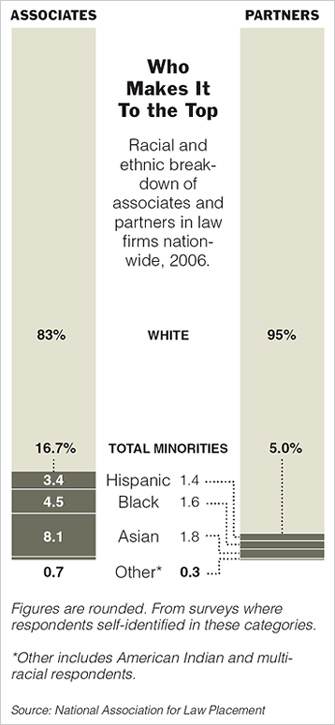
To be a partner at a major law firm is a virtual lock on wealth, prestige and influence. To achieve that lofty goal, young lawyers willingly pore over deadly dull documents, draft amply footnoted briefs of inordinate length, shmooze with clients no matter how boorish and work around the clock. But just what, exactly, it takes to make partner is elusive. A provocative new study of the reasons big law firms have so few minority partners claims there is a simple answer: grades.
Richard H. Sander, a law professor at the University of California, Los Angeles, who prepared the study, wrote that there is a “credentials gap” between white and black law school graduates that may explain why black lawyers do not make partner. He also found smaller gaps affecting Asian-American and Hispanic law students. The study, which comes as attacks on affirmative action have gained strength in recent months, focuses on the low numbers of minority partners at law firms. Of the 60,394 partners at 1,523 law firms that provide data to the National Association of Law Placement, nearly 95 percent are white.
Partners at elite law firms acknowledge the numbers are low. But they said grades received years earlier in law school had little to do with promotion. “You don’t want to know about my grades,” said Reid H. Weingarten, a well-known litigator at Steptoe & Johnson in Washington, who is white. Partners at top-tier firms said grades mattered in hiring first-year associates, who may receive $135,000 a year (not including the bonus). But when deciding whom to make a partner, they said grades were not a factor. In fact, promotion decisions can be very subjective, dependent on perception as well as output. Research shows that informal networks within firms may exclude young minority lawyers.
“We look for people who are good working in teams, people who show the potential to be a builder of a practice, through enhancing the reputation of the firm, enhancing and developing loyal client relationships,” said Keith C. Wetmore, chairman of Morrison & Foerster in New York. Grades might show willingness to work long hours, but not judgment or people skills, which are harder to evaluate objectively, many partners said. Eric A. S. Richards, a partner and member of the partner admission committee at O’Melveny & Myers in Los Angeles, said that partners tried to predict whether rising associates could bring in business. “We look for the promise,” he said.
When Mr. Sander described a causal connection between low grades and success at law firms, he cited a separate survey of law graduates of the University of Michigan. He said the study found that those who were still at firms 15 years after graduation — who were more likely to have made partner — had higher grades. That survey included about 10,000 lawyers, the vast majority of them white, the professor said.
But African-American, Latino and Asian lawyers are not the only ones who are underrepresented as partners. Women, who for years have been close to 50 percent of the law school students and make up 44 percent of the associate population, are just under 18 percent of all partners even though their law school grades are, overall, slightly higher than those of white men. Mr. Sander said that women in recent years had been making partner at higher rates, and noted that women may more often leave firms to create time for family or for other reasons.
Minority lawyers may also leave voluntarily, said David B. Wilkins, director of the program on the legal profession at Harvard, adding that they constantly receive offers from clients seeking to poach them. Mr. Sander has also written a study of law school admissions, arguing that because of racial preferences, law schools admit students who are less prepared and perform poorly — earning the lower grades. The system, as he sees it, is unfair to minority students because it sets them up for failure. “In both situations, we have preferences arguably undermining their intended effects,” he said, adding that the solution was to reduce preferences and improve training and support for minority lawyers.
But several senior lawyers said that because law firms are not such strictly objective meritocracies, hiring only minority lawyers with higher grades would not necessarily mean more minority partners. Many intangible factors, including luck, play a role. In a lean year, a firm will be reluctant to increase the number of partners splitting profits. A firm might promote a mediocre partner who speaks a specific language or has some other skill.
Then there are the all-important relationships formed between young lawyers and senior partners, said Theodore V. Wells Jr., a partner at Paul Weiss Rifkind Wharton & Garrison, who is black. “What happens very often is some associates are embraced more than others and it’s easier to fit in,” Mr. Wells said. “If you’re a minority person in a majority firm there are inherent difficulties.”
Diara M. Holmes, a Washington lawyer who last week made partner at Caplin & Drysdale, in Washington, attributed much of her success to mentors. “A mentor advocates on your behalf, obviously in the final decision but along the way as well,” said Ms. Holmes, who is the firm’s first African-American partner. “A mentor is also a person who can ensure that when you make mistakes, which is inevitable in an associate’s career, they do not cause you to fall off the track. I can’t imagine that my ‘A’ in property got me here.”
Monday, November 27, 2006
The Modern American Nigger
By John Ridley
Let me tell you something about niggers, the oppressed minority within our minority. Always down. Always out. Always complaining that they can’t catch a break. Notoriously poor about doing for themselves. Constantly in need of a leader but unable to follow in any direction that’s navigated by hard work, self-reliance. And though they spliff and drink and procreate their way onto welfare doles and WIC lines, niggers will tell you their state of being is no fault of their own. They are not responsible for their nearly 5% incarceration rate and their 9.2% unemployment rate. Not responsible for the 11.8% rate at which they drop out of high school. For the 69.3% of births they create out of wedlock.
Now, let me tell you something about my generation of black Americans. We are the inheritors of the “the Deal” forced upon the entrenched white social, political, and legal establishment when my parents’ generation won the struggle for civil rights. The Deal: We (blacks) take what is rightfully ours and you (the afore-described establishment) get citizens who will invest the same energy and dedication into raising families and working hard and being all around good people as was invested in snapping the neck of Jim Crow.
In the forty years since the Deal was brokered, since the Voting Rights Act was signed, there have been successes for blacks. But there are still too many blacks in prison, too many kids aggrandizing the thug life, and way too many African-Americans doing far too little with the opportunities others earned for them.
We came up from slavery to freedom without regard for the Constitution, which gave us nothing, and the plantation masters, who gave us the whip. We came up from oppression to civil rights without regard for hurled bricks and sicced police dogs. Water hoses. The word nigger.
This, then, is my directive: Let us achieve with equal disregard for the limitations of racism and the weight of those of us who threaten to drag all of us down with the clinging nature of their eternal victimization. Our preservation is too essential to be stunted by those unwilling to advance. And in my heart I don’t believe all blacks cannot achieve in the absence of aid any more than I believe the best way to teach a child to run is by forcing him to spend a lifetime of his knees.
Let me tell you something about niggers, the oppressed minority within our minority. Always down. Always out. Always complaining that they can’t catch a break. Notoriously poor about doing for themselves. Constantly in need of a leader but unable to follow in any direction that’s navigated by hard work, self-reliance. And though they spliff and drink and procreate their way onto welfare doles and WIC lines, niggers will tell you their state of being is no fault of their own. They are not responsible for their nearly 5% incarceration rate and their 9.2% unemployment rate. Not responsible for the 11.8% rate at which they drop out of high school. For the 69.3% of births they create out of wedlock.
Now, let me tell you something about my generation of black Americans. We are the inheritors of the “the Deal” forced upon the entrenched white social, political, and legal establishment when my parents’ generation won the struggle for civil rights. The Deal: We (blacks) take what is rightfully ours and you (the afore-described establishment) get citizens who will invest the same energy and dedication into raising families and working hard and being all around good people as was invested in snapping the neck of Jim Crow.
In the forty years since the Deal was brokered, since the Voting Rights Act was signed, there have been successes for blacks. But there are still too many blacks in prison, too many kids aggrandizing the thug life, and way too many African-Americans doing far too little with the opportunities others earned for them.
We came up from slavery to freedom without regard for the Constitution, which gave us nothing, and the plantation masters, who gave us the whip. We came up from oppression to civil rights without regard for hurled bricks and sicced police dogs. Water hoses. The word nigger.
This, then, is my directive: Let us achieve with equal disregard for the limitations of racism and the weight of those of us who threaten to drag all of us down with the clinging nature of their eternal victimization. Our preservation is too essential to be stunted by those unwilling to advance. And in my heart I don’t believe all blacks cannot achieve in the absence of aid any more than I believe the best way to teach a child to run is by forcing him to spend a lifetime of his knees.
Friday, November 10, 2006
November 7, 2006
There's a lively debate among historians over the question of whether the record of the forty-third President, George W. Bush, compiled with the indispensable help of a complaisant Congress, is the worst in American history or merely the worst of the sixteen who managed to make it into (if not out of) a second full term. That the record is appalling is by now beyond serious dispute. It includes an unending deficit—this year, it's $260 billion—that has already added $1.5 trillion to the national debt; the subcontracting of environmental, energy, labor, and health-care policymaking to corporate interests; repeated efforts to suppress scientific truth; a set of economic and fiscal policies that have slowed growth, spurred inequality, replenished the ranks of the poor and uninsured, and exacerbated the insecurities of the middle class; and, on Capitol Hill, a festival of bribery, some prosecutable (such as the felonies that have put one prominent Republican member of Congress in prison, while another awaits sentencing), some not (such as the reported two-million-dollar salary conferred upon a Republican congressman who became the pharmaceutical industry's top lobbyist immediately after shepherding into law a bill forbidding the government to negotiate prices for prescription drugs).
In 2002 and 2004, the ruling party avoided retribution for offenses like these by exploiting the fear of terrorism. What is different this time is that the overwhelming failure of the Administration's Iraq gamble is now apparent to all. This war of choice has pointlessly drained American military strength, undermined what had originally appeared to be success in Afghanistan, handed the Iranian mullahs a strategic victory, immunized the North Korean regime from a forceful response to its nuclear defiance, and compromised American leadership of the democratic world. You can read all about it, not only in the government's own recently leaked National Intelligence Estimate, which reports that the Iraq war has intensified the danger of Islamist terrorism, but also in a shelf of books—a score or more of them, beginning two and a half years ago with Richard A. Clarke's "Against All Enemies" and continuing through Bob Woodward's "State of Denial"—that document the mendacity, incompetence, lawlessness, and ideological arrogance surrounding the origins and conduct of the war.
In 2002 and 2004, the ruling party avoided retribution for offenses like these by exploiting the fear of terrorism. What is different this time is that the overwhelming failure of the Administration's Iraq gamble is now apparent to all. This war of choice has pointlessly drained American military strength, undermined what had originally appeared to be success in Afghanistan, handed the Iranian mullahs a strategic victory, immunized the North Korean regime from a forceful response to its nuclear defiance, and compromised American leadership of the democratic world. You can read all about it, not only in the government's own recently leaked National Intelligence Estimate, which reports that the Iraq war has intensified the danger of Islamist terrorism, but also in a shelf of books—a score or more of them, beginning two and a half years ago with Richard A. Clarke's "Against All Enemies" and continuing through Bob Woodward's "State of Denial"—that document the mendacity, incompetence, lawlessness, and ideological arrogance surrounding the origins and conduct of the war.
Monday, November 06, 2006
9/11 Paranoid
note by Nicholas Lehmann
The shock of September 11th, along with the enormity of the evident failure of the American invasion of Iraq, is simply incommensurate with what we are conditioned to expect as we watch the unspooling of American history. It feels as if a new factor has to be added – as if some additional, unofficial force must have been at work. Otherwise, no explanation of what happened could possibly make sense. And the facts presented in these films (“Outfoxed”, “Loose Change”, “Uncovered”, “Hijacking Catastrophe”), and the mountain of related material on the same subject, aren’t invented.
The shock of September 11th, along with the enormity of the evident failure of the American invasion of Iraq, is simply incommensurate with what we are conditioned to expect as we watch the unspooling of American history. It feels as if a new factor has to be added – as if some additional, unofficial force must have been at work. Otherwise, no explanation of what happened could possibly make sense. And the facts presented in these films (“Outfoxed”, “Loose Change”, “Uncovered”, “Hijacking Catastrophe”), and the mountain of related material on the same subject, aren’t invented.
Thursday, June 22, 2006
5 Moments That Define a Man
by Mike Zimmerman
Choosing to Marry
This moment comes long before you pop the question. Ask yourself not whether you’ll still want to sleep with her in 20 years (you will), but how you’ll react when you discover what foul brand of sugar and spice she’s truly made of. A promising answer: “We’re still a pretty good team.”
Becoming a Father
There are tons of fatherhood variables, but we do know one simple truth: The only times you’ll suck at being a dad are the moments you refuse to put your kids’ needs first. If you’re ready to prioritize them consistently, you’ll cruise.
Receiving Your First Real Defeat
We don’t mean losing to Springfield during your sophomore year. The adult defeats – job losses, divorces, family estrangements – are the ones that cut deep into the ego, because they spotlight failure of temper, character, and adaptability. Are you able to limp to your feet, spit the turf out of your mouth, and smile with your two front teeth missing? You’d better be. People rally around that guy.
Becoming an Orphan
The day both your mom and dad are officially planted is a defining one. No more training. No more advice. No more free meals on Thanksgiving Day. It’s your turn to be the example at the head of the table. You don’t have to wear a cardigan when you carve the turkey, but you do have to take up the knife. Don’t cut yourself.
Realizing You Don’t Know Everything
The younger you are when you experience this moment of clarity, the better. It means you’ll be humbler in the face of knowledge – that’s a good thing. It also means you’ll have more years to quest, to learn, to figure out everything from options trading to tying a tighter fly. You ain’t stupid, sir. But you ain’t God, either.
Al Gore's Guidelines
1. When a direction feels right, go that way to find out why. Fulfillment usualy follows.
2. Solve one problem. You may find you're inspired to solve more.
3. There are a lot of us on the planet, and we do a lot damage.
We can also fix a lot of things, if we choose.
4. Everyone needs a purpose in life. Even puppies.
2. Solve one problem. You may find you're inspired to solve more.
3. There are a lot of us on the planet, and we do a lot damage.
We can also fix a lot of things, if we choose.
4. Everyone needs a purpose in life. Even puppies.
Wednesday, June 14, 2006
Goodbye, Columbus
When America won its independence,
what became of the slaves who fled for theirs?
by Jill Lepore
What with the noise, the heat, and the danger of being forced back into slavery, sometimes it's good to get out of the city. Such, at least, was the assessment of Harry Washington, who, in July of 1783, made his way to the salty, sunbaked docks along New York's East River and boarded the British ship L'Abondance, bound for Nova Scotia. A clerk dutifully noted his departure in the "Book of Negroes," a handwritten ledger listing the three thousand runaway slaves and free blacks who evacuated New York with the British that summer: "Harry Washington, 43, fine fellow. Formerly the property of General Washington; left him 7 years ago."
Born on the Gambia River around 1740, not far from where he would one day die, Harry Washington was sold into slavery sometime before 1763. Twelve years later, in November, 1775, he was grooming his masters horses in the stables at Mount Vernon when the royal governor of Virginia, Lord Dunmore, offered freedom to any slaves who would join His Majesty's troops in suppressing the American rebellion. That December, George Washington, commanding the Continental Army in Cambridge, received a report that Dunmore’s proclamation had stirred the passions of his own slaves. "There is not a man of them but would leave us if they believed they could make their escape," a cousin of Washington's wrote from Mount Vernon, adding bitterly, "Liberty is sweet." In August of 1776, just a month after delegates to the Continental Congress determined that in the course of human events it sometimes becomes necessary for one people to dissolve the bands that have connected them with another, Harry Washington, declared his own independence by running away to fight with Dunmore's all-black British regiment, wearing a uniform embroidered with the motto "Liberty to Slaves." Liberty may not have been as sweet as he'd hoped. For most of the war, he belonged to an unarmed company known as the Black Pioneers, who were more or less garbagemen, ordered to "Assist in Cleaning the Streets & Removing all Nuisances being thrown into the Streets." The Black Pioneers followed British troops under the command of Henry Clinton as they moved from New York to Philadelphia to Charleston, and, after the fall of Charleston, back to New York again, which is how Harry Washington came to be in the city in 1783, and keen to leave before General Washington repossessed it, and him.
No one knows how many former slaves had fled the United States by the end of the American Revolution. Not as many as wanted to, anyway. During the war, between eighty thousand and a hundred thousand (nearly one in five) left their homes, running from slavery to the freedom promised by the British, and betting on a British victory. They lost that bet. They died in battle, they died of disease, they ended up someplace else, they ended up back where they started, and worse off. (A fifteen-year-old girl captured while heading for Dunmore's regiment was greeted by her master with a whipping of eighty lashes, after which he poured hot embers into her wounds.) When the British evacuated, fifteen thousand blacks went with them, though not necessarily to someplace better.
From the moment that Cornwallis surrendered at Yorktown, in 1781, American allies reported seeing "herds of Negroes" fleeing through Virginia's swamps of pine and cypress. A few made it to a warship that Washington, under the terms of the British surrender, had allowed to sail to New York. Some ran to the French, on the not unreasonable supposition that earning wages polishing shoes in Paris had to be better than planting tobacco in Virginia for nothing but floggings. "We gained a veritable harvest of domestics," one surprised French officer wrote. Hundreds of Cornwallis's soldiers and their families were captured by their former owners, including five of Thomas Jefferson's slaves and two women owned by George Washington. Those who escaped raced to make it behind British lines before the slave catchers caught up with them. Pregnant women had to hurry, too, but not so fast as to bring on labor, lest their newborns miss their chance for a coveted "BB" certificate: "Born Free Behind British Lines."
As runaways flocked to New York, or Charleston, or Savannah, cities from which the British disembarked, their owners followed them. Boston King, an escaped slave from South Carolina, saw American slave owners "seizing upon their slaves in the streets of New York, or even dragging them out of their beds." A Hessian officer reported, "Almost five thousand persons have come into this city to take possession again of their former property." (It was at Washington's insistence that the names of those who boarded British ships were recorded in the "Book of Negroes," so that owners might later file claims for compensation.) In Charleston, after the ships were full, British soldiery patrolled the wharves to keep back the black men, women, and children who were frantic to leave the country. A small number managed to duck under the redcoats' raised bayonets, jump off the wharves, and swim out to the last longboats ferrying passengers to the British fleet, whose crowded ships included the aptly named Free Briton. Clinging to the sides of the longboats, they were not allowed on board, but neither would they let go; in the end, their fingers were chopped off.
But those who did leave America also left American history. Or, rather, they have been left out of it. Theirs is not an undocumented story (the "Book of Negroes" runs to three volumes); it's just one that has rarely been told, for a raft of interesting, if opposing, reasons. A major one is that nineteenth-century African-American abolitionists decided that they would do better by telling the story of the many blacks who fought on the patriot side during the Revolution, and had therefore earned for their race the right to freedom and full citizenship and an end to Jim Crow. "Not a few of our fathers suffered and bled" in the cause of American independence, Peter Williams, Jr., declared in a Fourth of July oration in New York in 1830. (Williams's own father, who had joined American troops in defiance of his Loyalist master, later managed to purchase his freedom and went on to help found the African Methodist Episcopal Zion Church.) When the Boston abolitionist William Cooper Nell published "The Colored Patriots of the American Revolution," in 1855, Harriet Beecher Stowe supplied an introduction:
The colored race have been generally
considered by their enemies, and sometimes
even by their friends, as deficient in energy
and courage. Their virtues have been supposed
to be principally negative ones. This
little collection of interesting incidents, made
by a colored man, will redeem the character
of the race from this misconception.
Best not to mention those who fled to the British. Having abandoned the United States, they not only were of no use in redeeming "the character of the race"; they had failed to earn the "passport" to citizenship that Nell believed patriot service conferred.
They were also too shockingly un-free to be included in grand nineteenth-century narratives of the Revolution as a triumph for liberty. As the historian Gary Nash observes in "The Forgotten Fifth: African Americans in the Age of Revolution" (Harvard; $19.95), slavery is so entirely missing from those histories that "it would appear that the British and the Americans fought for seven years as if half a million African Americans had been magically whisked off the continent." In 1891, the Harvard scholar John Fiske took notice of Dunmore's proclamation in his two-volume "American Revolution," only to dismiss it. "The relations between master and slave in Virginia were so pleasant," Fiske wrote, that Britain's "offer of freedom fell upon dull uninterested ears."
It wasn't until Benjamin Quarles's landmark "The Negro in the American Revolution," in 1961, that what Harry Washington might have had to say about that became clear: Liberty is sweet. Many fine scholars have followed in Quarles's wake, but it would be fair to say that their work has yet to challenge what most Americans think about the times that tried men's souls.
With no place in any national historical narrative, black refugees of the American Revolution have been set adrift. Perhaps, then, it is hardly surprising that they have been taken up recently not by American historians but by historians of the places they went to.
Two new histories of their travels, the most ambitious yet, have just been published, one written by an Englishman, the other by an Australian. The British historian Simon Schamas "Rough Crossings: Britain, the Slaves, and the American Revolution" (Ecco; $29.95) follows the exiles to Nova Scotia and Sierra Leone but keeps London, and English antislavery activists, at its center. Cassandra Pybus's "Epic Journeys of Freedom: Runaway Slaves of the American Revolution and Their Global Quest for Liberty" (Beacon; $26.95) follows them everywhere, including to the Australian penal colony of Botany Bay. She teaches at the University of Sydney.
Schama writes like no one so much as Dickens. Here is how he introduces the founder of England's antislavery movement, leaving his brother's house on Mincing Lane, "neither the worst nor the best address in the City of London," in 1765:
The door opened and out stepped an
angular man looking older than his thirty years.
His tall but meagre frame, hollow cheeks,
lantern jaw and short curled wig gave him
the air of either an underpaid clerk or an
unworldly cleric; the truth is that Granville
Sharp was something of both.
Schamas book is divided into two parts. The first part chronicles Sharp's career. With close colleagues, including the abolitionist Thomas Clarkson and the former slave Olaudah Equiano, Sharp led Britain's extraordinary campaign to put an end to what he called the "Accursed Thing": human bondage. It took years, but they succeeded. England took a dramatic step toward abolishing slavery on its soil in 1772, in a landmark case in which a man named James Somerset won his freedom. In 1807, the British Parliament outlawed the slave trade. The following year, the U.S. Congress did the same. In other words, England banned domestic slavery decades before making it illegal for British merchants and ships' captains to buy and sell slaves. The United States did the reverse, outlawing the overseas slave trade in 1808 but not declaring an end to slavery until Lincoln's Emancipation Proclamation, in 1863.
Schama points out that news of the Somerset case, as much as Dunmore's proclamation, is what led so many American slaves to flee to British lines during the American Revolution. They wrongly believed that the Somerset judgment's nuanced and limited ruling meant that "as soon as any slave sets his foot on English ground he becomes free." For one American refugee, the link between England and liberty was so close that he renamed himself British Freedom. Or consider "Yankee Doodle, or, The Negroes Farewell to America," a minstrel song popular in London in the seventeen-eighties:
Now farewell my Massa my Missey adieu
More blows or more stripes will me e'er
take from you...
Den Hey! for old Englan' where Liberty
reigns
Where Negroe no beaten or loaded with
chains
But, more often than not, the price of British freedom was poverty. "I am Thirty Nine Years of Age & am ready & willing to serve His Britinack Majesty," Peter Anderson told a relief commission in London. "But I am realy starvin about the Streets." At the beginning of the war, Anderson had left behind his wife and three children in Virginia to join Dunmore's regiment. He was wounded, captured, and sentenced to be hanged. After six months as a prisoner, he escaped and foraged in the woods until he found his way back to the British Army. All this he endured only to land in London, reduced to begging. The commissioners were not sympathetic. "Instead of being sufferers of the wars," they concluded, black veterans had benefitted from it. Penniless they might be, but they had "gained their liberty and therefore come with a very ill-grace to ask for the bounty of government."
Not everyone who evacuated with the British sailed to England. Like thousands of white Loyalists, black Loyalists were relocated to Britain's northern colonies: mostly to Nova Scotia, New Brunswick, and Ontario. Some fifteen hundred settled in Birchtown, Nova Scotia, making it the largest free black community in North America. It was also a disaster. By the time Harry Washington arrived there, in August of 1783, there was nothing to eat, it was too late to plant, and the topsoil was too thin for anything much to grow. In 1789, the settlers were still starving. Boston King reported, "Many of the poor people were compelled to sell their best gowns for five pounds of flour, in order to support life. When they had parted with all their clothes, even to their blankets, several of them fell down dead in the streets, thro' hunger. Some killed and ate their dogs and cats."
Meanwhile, in London, Granville Sharp and his colleagues on the Committee for the Relief of the Black Poor began making plans to send England's beleaguered blacks to Africa. This seems now, as it did to many people then, a preposterous plan, as if the slave trade could somehow be undone by this reverse voyage, settling freed slaves just a stone's throw from British slave-trading forts. While the emigrants waited on board ships in Portsmouth Harbor, the African-bornwriter and former slave Quobna Ottobah Cugoano warned that they "had better swim to shore, if they can, to preserve their lives and liberties in Britain, than to hazard themselves at sea... and the peril of settling at Sierra Leone." But sail they did. In May of 1787, nearly four hundred reached Sierra Leone, where they settled at a place they named Granville Town, and elected as their governor a runaway slave and Revolutionary War veteran from Philadelphia named Richard Weaver. Within five months, plagued by disease and famine, a hundred and twenty-two of the settlers were dead. And, just as Cugoano had predicted, some were kidnapped and sold into slavery all over again. In 1790, a local ruler burned Granville Town to the ground.
That was not to be the end of it. In the second part of "Rough Crossings," Schama turns to the journey of John Clarkson ("the 'other' Clarkson—second born, perfectly affable, sweet-tempered Johnny"), chosen by Sharp and the elder Clarkson to head a second attempt to settle Sierra Leone, this time with the "poor blacks" who had settled in Nova Scotia. In January, 1792, nearly twelve hundred black men, women, and children found berths on fifteen ships in Halifax Harbor. Among them were British Freedom and Harry Washington. Before the convoy left the harbor, Clarkson rowed from ship to ship, handing to each family a certificate "indicating the plot of land 'free of expence' they were to be given upon arrival in Africa.'"
The colony's new capital, on the Sierra Leone peninsula, was called the Province of Freedom; it did not live up to its name. There was death: along with dozens of others, Boston King's wife, Violet, died of "putrid fever" within weeks of arrival. There was intrigue: in 1792, Clarkson took what he thought would be a brief trip to England, but the colony's directors, dissatisfied with his failure to turn a profit from plantation crops, never sent him back. And there was avarice: despite the promise of free land, Clarkson's successors demanded exorbitant rents. "We wance did call it Free Town," some weary settlers wrote to Clarkson in 1795, "but since your absence we have a reason to call it a town of slavery."
By 1799, Sierra Leone's settlers had grown so discontented, so revolutionary in their rejection of the colony's tyrannical government, that they were, in the words of one London abolitionist, "as thorough Jacobins as if they had been trained and educated in Paris." The next year, a group of rebels declared independence. They were crushed. Tried by a military tribunal, they were banished from Freetown to the other side of the Sierra Leone River. In their exile, they elected Harry Washington as their leader, just months after George Washington died at Mount Vernon, having freed his slaves in his will.
Cassandra Pybus wants to rescue Harry Washington from the "callous indifference of history," to call attention to what he shared with the first President of the United States: "a commitment to the transforming ideals of liberty and self-determination." Schama is more interested in one of Harry Washington's fellow-rebels. "Rough Crossings" begins by imagining British Freedom "scratching a living from the stingy soil" of Nova Scotia and ends with his exile outside the Province of Freedom:
We can picture him surviving... on a few acres, or more likely finding a way to do business with the local chiefs. And if he did indeed cling to that name, he could only do so by not crossing the river to Freetown. For he must have understood that he had had his day. Over there, no one had much use for British freedom any more. Over there was something different. Over there was the British Empire.
But picturing British Freedom is about all that we can do; apart from his name, we know almost nothing about him. (Because Freedom renamed himself, he can't be traced in records like the "Book of Negroes.") "British Freedom's name said something important: that he was no longer negotiable property," Schama writes. Names count — they mattered to the parents who named their BB-certified daughter Patience Freeman — but sometimes names aren't enough. Among Schama's many enviable talents as a historian and as a stylist is his ability to turn a name into a meditation on liberty and empire. But the asymmetry, borne of the asymmetry of the evidence, is not without consequences: the black expatriates in "Rough Crossings" have names and ages and imagined motives, while the lantern-jawed architect of their freedom, Granville Sharp, is rendered in all his Dickensian detail. Sharp is focused; the settlers are a bit of a blur.
Pybus uses a different lens. She pays scant attention to the likes of Granville Sharp. Instead, she trails the fugitives relentlessly, including the unlucky few who, convicted of petty crimes in London, were shipped thirteen thousand miles away, to Botany Bay, a place whose staggering deprivations made it worse than London, worse than Birchtown, worse than Granville Town, worse than the Province of Freedom. Here's a hint: in 1790, the punishment for stealing food was increased from a thousand to two thousand lashes.
What Pybus offers is a collective biography, made possible through her pains-taking—breathtaking-examination of tax lists, muster rolls, property deeds, court dockets, parish records, and unwieldy uncatalogued manuscripts like the papers of General Henry Clinton. It allows her to rattle off details like this: in Botany Bay in 1788, "John Randall, the black ex-soldier from Connecticut convicted of stealing a watch chain in Manchester, was married to Esther Howard, a white London oyster seller, convicted at the Old Bailey of stealing a watch." In case it escaped your notice, that's months of eye-straining archival research on three continents in just thirty-four words. (She later, and still more casually, throws out that Randall eventually found work as a kangaroo-hunter, that by 1792 he had received a land grant of sixty acres; and that, widowed twice, he married three times and had nine children before his death, in 1822.) Men like Randall, Pybus argues, "carried to the far comers of the globe the animating principles of the revolution that had so emphatically excluded them."
Maybe. But, at journey s end, it's hard to know what to make of the travails of British Freedom or Harry Washington or John Randall To follow them is, still, to leave American history behind. The story of the British abolition movement has been elegantly told by Adam Hochschild, in "Bury the Chains: Prophets and Rebels in the Fight to Free an Empire's Slaves" (Houghton Mifflin; $26.95). It is also at the heart of an excellent new biography by Vincent Carretta, "Equiano the African: Biography of a Self-Made Man" (University of Georgia Press; $29.95). These, like Schama's and Pybus's, are rich and wonderful books. All the same, with their praise of prophets and rebels and self-made men on a global quest for liberty, some readers might conclude that English abolitionists and American runaways ought to serve as honorary Founding Fathers, as though the likes of Washington and Jefferson will no longer do. (Damn those slave-owning sons of liberty!)
In the midst of this, it's easy to forget that many eighteenth-century Americans considered the British hypocritical about slavery. After the Somerset decision, Benjamin Franklin complained:
Pharisaical Britain! to pride thyself in
setting free a single Slave that happens to land
on thy coasts, while thy Merchants in all thy
ports are encouraged by thy laws to continue
a commerce whereby so many hundreds of
thousands are dragged into a slavery that can
scarce be said to end with their lives, since it.
is entailed on their posterity!
Moreover, it was far easier for Britain, where there were few slaves to begin with, to free its slaves than it was for the American colonies, where there was considerable support for ending the slave trade, something many patriots had come to see as having been imposed on them by a tyrannical king, to Britain's profit and not their own. In Thomas Jefferson's mind, promising freedom to the very people whom British slave traders had enslaved constituted George III's last, and most unforgivable, act of treachery. In a breathless paragraph at the end of his original draft of the Declaration of Independence, Jefferson blamed the King for the slave trade ("He has waged cruel war against human nature itself, violating its most sacred rights of life and liberty in the persons of a distant people who never offended him, captivating and carrying them into slavery); for his vetoes of the colonists' efforts to abolish it ("Determined to keep open a market where MEN should be bought and sold, he has prostituted his negative for suppressing every legislative attempt to prohibit or to restrain this execrable commerce"); and for Dunmore's proclamation ("He is now exciting those very people to rise in arms among us, and to purchase that liberty of which he has deprived them, by murdering the people on whom he also obtruded them").
It was the Declaration's last, longest, and angriest grievance. The other delegates could not abide it: they struck it out almost entirely. To some, it went too far; to others, it didn't go far enough. And, as everyone knew, it was they, and not the British, who were by now most vulnerable to charges of hypocrisy. (As Samuel Johnson had wryly inquired in 1775, "How is it that we hear the loudest yelps for liberty among the drivers of negroes?") Best, then, to leave slavery out altogether.
Historians have hardly known what to make of Jefferson's rant. Nash deems it "patendy false." Schama calls it a "tour de force of disingenuousness." But at least part of what Jefferson meant was that it was the Revolution itself that derailed the American antislavery movement. In the seventeen-sixties and early seventeen-seventies, the colonists were arguably more ardent opponents of slavery than the British were. In 1764, the patriot James Otis, Jr., declared that nothing could be said "in favor of a trade that is the most shocking violation of the law of nature, has a direct tendency to diminish the idea of the inestimable value of liberty, and makes every dealer in it a tyrant." Not long after the Boston Massacre, in 1770, John Hancock's uncle preached a sermon urging the provincial legislature of Massachusetts to support the abolition of slavery, warning, "When God ariseth, and when he visiteth, what shall we answer!" In April, 1775, just five days before a shot was heard round the world, Philadelphians founded the Society for the Relief of Free Negroes Unlawfully Held in Bondage.
By no means did everyone in the colonies oppose the slave trade, and even fewer could imagine emancipation. Still, if the patriots hadn't needed to forge a union to protect their rights to life, liberty, and the pursuit of happiness, they might have come to some agreement on ending slavery. But uniting the colonies in their opposition to the King and Parliament meant, by 1776, putting slavery to one side. It meant editing the Declaration of Independence. It also meant that Harry Washington, and John Randall, and British Freedom, and thousands more, decided to leave. They did not fare well.
what became of the slaves who fled for theirs?
by Jill Lepore
What with the noise, the heat, and the danger of being forced back into slavery, sometimes it's good to get out of the city. Such, at least, was the assessment of Harry Washington, who, in July of 1783, made his way to the salty, sunbaked docks along New York's East River and boarded the British ship L'Abondance, bound for Nova Scotia. A clerk dutifully noted his departure in the "Book of Negroes," a handwritten ledger listing the three thousand runaway slaves and free blacks who evacuated New York with the British that summer: "Harry Washington, 43, fine fellow. Formerly the property of General Washington; left him 7 years ago."
Born on the Gambia River around 1740, not far from where he would one day die, Harry Washington was sold into slavery sometime before 1763. Twelve years later, in November, 1775, he was grooming his masters horses in the stables at Mount Vernon when the royal governor of Virginia, Lord Dunmore, offered freedom to any slaves who would join His Majesty's troops in suppressing the American rebellion. That December, George Washington, commanding the Continental Army in Cambridge, received a report that Dunmore’s proclamation had stirred the passions of his own slaves. "There is not a man of them but would leave us if they believed they could make their escape," a cousin of Washington's wrote from Mount Vernon, adding bitterly, "Liberty is sweet." In August of 1776, just a month after delegates to the Continental Congress determined that in the course of human events it sometimes becomes necessary for one people to dissolve the bands that have connected them with another, Harry Washington, declared his own independence by running away to fight with Dunmore's all-black British regiment, wearing a uniform embroidered with the motto "Liberty to Slaves." Liberty may not have been as sweet as he'd hoped. For most of the war, he belonged to an unarmed company known as the Black Pioneers, who were more or less garbagemen, ordered to "Assist in Cleaning the Streets & Removing all Nuisances being thrown into the Streets." The Black Pioneers followed British troops under the command of Henry Clinton as they moved from New York to Philadelphia to Charleston, and, after the fall of Charleston, back to New York again, which is how Harry Washington came to be in the city in 1783, and keen to leave before General Washington repossessed it, and him.
No one knows how many former slaves had fled the United States by the end of the American Revolution. Not as many as wanted to, anyway. During the war, between eighty thousand and a hundred thousand (nearly one in five) left their homes, running from slavery to the freedom promised by the British, and betting on a British victory. They lost that bet. They died in battle, they died of disease, they ended up someplace else, they ended up back where they started, and worse off. (A fifteen-year-old girl captured while heading for Dunmore's regiment was greeted by her master with a whipping of eighty lashes, after which he poured hot embers into her wounds.) When the British evacuated, fifteen thousand blacks went with them, though not necessarily to someplace better.
From the moment that Cornwallis surrendered at Yorktown, in 1781, American allies reported seeing "herds of Negroes" fleeing through Virginia's swamps of pine and cypress. A few made it to a warship that Washington, under the terms of the British surrender, had allowed to sail to New York. Some ran to the French, on the not unreasonable supposition that earning wages polishing shoes in Paris had to be better than planting tobacco in Virginia for nothing but floggings. "We gained a veritable harvest of domestics," one surprised French officer wrote. Hundreds of Cornwallis's soldiers and their families were captured by their former owners, including five of Thomas Jefferson's slaves and two women owned by George Washington. Those who escaped raced to make it behind British lines before the slave catchers caught up with them. Pregnant women had to hurry, too, but not so fast as to bring on labor, lest their newborns miss their chance for a coveted "BB" certificate: "Born Free Behind British Lines."
As runaways flocked to New York, or Charleston, or Savannah, cities from which the British disembarked, their owners followed them. Boston King, an escaped slave from South Carolina, saw American slave owners "seizing upon their slaves in the streets of New York, or even dragging them out of their beds." A Hessian officer reported, "Almost five thousand persons have come into this city to take possession again of their former property." (It was at Washington's insistence that the names of those who boarded British ships were recorded in the "Book of Negroes," so that owners might later file claims for compensation.) In Charleston, after the ships were full, British soldiery patrolled the wharves to keep back the black men, women, and children who were frantic to leave the country. A small number managed to duck under the redcoats' raised bayonets, jump off the wharves, and swim out to the last longboats ferrying passengers to the British fleet, whose crowded ships included the aptly named Free Briton. Clinging to the sides of the longboats, they were not allowed on board, but neither would they let go; in the end, their fingers were chopped off.
But those who did leave America also left American history. Or, rather, they have been left out of it. Theirs is not an undocumented story (the "Book of Negroes" runs to three volumes); it's just one that has rarely been told, for a raft of interesting, if opposing, reasons. A major one is that nineteenth-century African-American abolitionists decided that they would do better by telling the story of the many blacks who fought on the patriot side during the Revolution, and had therefore earned for their race the right to freedom and full citizenship and an end to Jim Crow. "Not a few of our fathers suffered and bled" in the cause of American independence, Peter Williams, Jr., declared in a Fourth of July oration in New York in 1830. (Williams's own father, who had joined American troops in defiance of his Loyalist master, later managed to purchase his freedom and went on to help found the African Methodist Episcopal Zion Church.) When the Boston abolitionist William Cooper Nell published "The Colored Patriots of the American Revolution," in 1855, Harriet Beecher Stowe supplied an introduction:
The colored race have been generally
considered by their enemies, and sometimes
even by their friends, as deficient in energy
and courage. Their virtues have been supposed
to be principally negative ones. This
little collection of interesting incidents, made
by a colored man, will redeem the character
of the race from this misconception.
Best not to mention those who fled to the British. Having abandoned the United States, they not only were of no use in redeeming "the character of the race"; they had failed to earn the "passport" to citizenship that Nell believed patriot service conferred.
They were also too shockingly un-free to be included in grand nineteenth-century narratives of the Revolution as a triumph for liberty. As the historian Gary Nash observes in "The Forgotten Fifth: African Americans in the Age of Revolution" (Harvard; $19.95), slavery is so entirely missing from those histories that "it would appear that the British and the Americans fought for seven years as if half a million African Americans had been magically whisked off the continent." In 1891, the Harvard scholar John Fiske took notice of Dunmore's proclamation in his two-volume "American Revolution," only to dismiss it. "The relations between master and slave in Virginia were so pleasant," Fiske wrote, that Britain's "offer of freedom fell upon dull uninterested ears."
It wasn't until Benjamin Quarles's landmark "The Negro in the American Revolution," in 1961, that what Harry Washington might have had to say about that became clear: Liberty is sweet. Many fine scholars have followed in Quarles's wake, but it would be fair to say that their work has yet to challenge what most Americans think about the times that tried men's souls.
With no place in any national historical narrative, black refugees of the American Revolution have been set adrift. Perhaps, then, it is hardly surprising that they have been taken up recently not by American historians but by historians of the places they went to.
Two new histories of their travels, the most ambitious yet, have just been published, one written by an Englishman, the other by an Australian. The British historian Simon Schamas "Rough Crossings: Britain, the Slaves, and the American Revolution" (Ecco; $29.95) follows the exiles to Nova Scotia and Sierra Leone but keeps London, and English antislavery activists, at its center. Cassandra Pybus's "Epic Journeys of Freedom: Runaway Slaves of the American Revolution and Their Global Quest for Liberty" (Beacon; $26.95) follows them everywhere, including to the Australian penal colony of Botany Bay. She teaches at the University of Sydney.
Schama writes like no one so much as Dickens. Here is how he introduces the founder of England's antislavery movement, leaving his brother's house on Mincing Lane, "neither the worst nor the best address in the City of London," in 1765:
The door opened and out stepped an
angular man looking older than his thirty years.
His tall but meagre frame, hollow cheeks,
lantern jaw and short curled wig gave him
the air of either an underpaid clerk or an
unworldly cleric; the truth is that Granville
Sharp was something of both.
Schamas book is divided into two parts. The first part chronicles Sharp's career. With close colleagues, including the abolitionist Thomas Clarkson and the former slave Olaudah Equiano, Sharp led Britain's extraordinary campaign to put an end to what he called the "Accursed Thing": human bondage. It took years, but they succeeded. England took a dramatic step toward abolishing slavery on its soil in 1772, in a landmark case in which a man named James Somerset won his freedom. In 1807, the British Parliament outlawed the slave trade. The following year, the U.S. Congress did the same. In other words, England banned domestic slavery decades before making it illegal for British merchants and ships' captains to buy and sell slaves. The United States did the reverse, outlawing the overseas slave trade in 1808 but not declaring an end to slavery until Lincoln's Emancipation Proclamation, in 1863.
Schama points out that news of the Somerset case, as much as Dunmore's proclamation, is what led so many American slaves to flee to British lines during the American Revolution. They wrongly believed that the Somerset judgment's nuanced and limited ruling meant that "as soon as any slave sets his foot on English ground he becomes free." For one American refugee, the link between England and liberty was so close that he renamed himself British Freedom. Or consider "Yankee Doodle, or, The Negroes Farewell to America," a minstrel song popular in London in the seventeen-eighties:
Now farewell my Massa my Missey adieu
More blows or more stripes will me e'er
take from you...
Den Hey! for old Englan' where Liberty
reigns
Where Negroe no beaten or loaded with
chains
But, more often than not, the price of British freedom was poverty. "I am Thirty Nine Years of Age & am ready & willing to serve His Britinack Majesty," Peter Anderson told a relief commission in London. "But I am realy starvin about the Streets." At the beginning of the war, Anderson had left behind his wife and three children in Virginia to join Dunmore's regiment. He was wounded, captured, and sentenced to be hanged. After six months as a prisoner, he escaped and foraged in the woods until he found his way back to the British Army. All this he endured only to land in London, reduced to begging. The commissioners were not sympathetic. "Instead of being sufferers of the wars," they concluded, black veterans had benefitted from it. Penniless they might be, but they had "gained their liberty and therefore come with a very ill-grace to ask for the bounty of government."
Not everyone who evacuated with the British sailed to England. Like thousands of white Loyalists, black Loyalists were relocated to Britain's northern colonies: mostly to Nova Scotia, New Brunswick, and Ontario. Some fifteen hundred settled in Birchtown, Nova Scotia, making it the largest free black community in North America. It was also a disaster. By the time Harry Washington arrived there, in August of 1783, there was nothing to eat, it was too late to plant, and the topsoil was too thin for anything much to grow. In 1789, the settlers were still starving. Boston King reported, "Many of the poor people were compelled to sell their best gowns for five pounds of flour, in order to support life. When they had parted with all their clothes, even to their blankets, several of them fell down dead in the streets, thro' hunger. Some killed and ate their dogs and cats."
Meanwhile, in London, Granville Sharp and his colleagues on the Committee for the Relief of the Black Poor began making plans to send England's beleaguered blacks to Africa. This seems now, as it did to many people then, a preposterous plan, as if the slave trade could somehow be undone by this reverse voyage, settling freed slaves just a stone's throw from British slave-trading forts. While the emigrants waited on board ships in Portsmouth Harbor, the African-bornwriter and former slave Quobna Ottobah Cugoano warned that they "had better swim to shore, if they can, to preserve their lives and liberties in Britain, than to hazard themselves at sea... and the peril of settling at Sierra Leone." But sail they did. In May of 1787, nearly four hundred reached Sierra Leone, where they settled at a place they named Granville Town, and elected as their governor a runaway slave and Revolutionary War veteran from Philadelphia named Richard Weaver. Within five months, plagued by disease and famine, a hundred and twenty-two of the settlers were dead. And, just as Cugoano had predicted, some were kidnapped and sold into slavery all over again. In 1790, a local ruler burned Granville Town to the ground.
That was not to be the end of it. In the second part of "Rough Crossings," Schama turns to the journey of John Clarkson ("the 'other' Clarkson—second born, perfectly affable, sweet-tempered Johnny"), chosen by Sharp and the elder Clarkson to head a second attempt to settle Sierra Leone, this time with the "poor blacks" who had settled in Nova Scotia. In January, 1792, nearly twelve hundred black men, women, and children found berths on fifteen ships in Halifax Harbor. Among them were British Freedom and Harry Washington. Before the convoy left the harbor, Clarkson rowed from ship to ship, handing to each family a certificate "indicating the plot of land 'free of expence' they were to be given upon arrival in Africa.'"
The colony's new capital, on the Sierra Leone peninsula, was called the Province of Freedom; it did not live up to its name. There was death: along with dozens of others, Boston King's wife, Violet, died of "putrid fever" within weeks of arrival. There was intrigue: in 1792, Clarkson took what he thought would be a brief trip to England, but the colony's directors, dissatisfied with his failure to turn a profit from plantation crops, never sent him back. And there was avarice: despite the promise of free land, Clarkson's successors demanded exorbitant rents. "We wance did call it Free Town," some weary settlers wrote to Clarkson in 1795, "but since your absence we have a reason to call it a town of slavery."
By 1799, Sierra Leone's settlers had grown so discontented, so revolutionary in their rejection of the colony's tyrannical government, that they were, in the words of one London abolitionist, "as thorough Jacobins as if they had been trained and educated in Paris." The next year, a group of rebels declared independence. They were crushed. Tried by a military tribunal, they were banished from Freetown to the other side of the Sierra Leone River. In their exile, they elected Harry Washington as their leader, just months after George Washington died at Mount Vernon, having freed his slaves in his will.
Cassandra Pybus wants to rescue Harry Washington from the "callous indifference of history," to call attention to what he shared with the first President of the United States: "a commitment to the transforming ideals of liberty and self-determination." Schama is more interested in one of Harry Washington's fellow-rebels. "Rough Crossings" begins by imagining British Freedom "scratching a living from the stingy soil" of Nova Scotia and ends with his exile outside the Province of Freedom:
We can picture him surviving... on a few acres, or more likely finding a way to do business with the local chiefs. And if he did indeed cling to that name, he could only do so by not crossing the river to Freetown. For he must have understood that he had had his day. Over there, no one had much use for British freedom any more. Over there was something different. Over there was the British Empire.
But picturing British Freedom is about all that we can do; apart from his name, we know almost nothing about him. (Because Freedom renamed himself, he can't be traced in records like the "Book of Negroes.") "British Freedom's name said something important: that he was no longer negotiable property," Schama writes. Names count — they mattered to the parents who named their BB-certified daughter Patience Freeman — but sometimes names aren't enough. Among Schama's many enviable talents as a historian and as a stylist is his ability to turn a name into a meditation on liberty and empire. But the asymmetry, borne of the asymmetry of the evidence, is not without consequences: the black expatriates in "Rough Crossings" have names and ages and imagined motives, while the lantern-jawed architect of their freedom, Granville Sharp, is rendered in all his Dickensian detail. Sharp is focused; the settlers are a bit of a blur.
Pybus uses a different lens. She pays scant attention to the likes of Granville Sharp. Instead, she trails the fugitives relentlessly, including the unlucky few who, convicted of petty crimes in London, were shipped thirteen thousand miles away, to Botany Bay, a place whose staggering deprivations made it worse than London, worse than Birchtown, worse than Granville Town, worse than the Province of Freedom. Here's a hint: in 1790, the punishment for stealing food was increased from a thousand to two thousand lashes.
What Pybus offers is a collective biography, made possible through her pains-taking—breathtaking-examination of tax lists, muster rolls, property deeds, court dockets, parish records, and unwieldy uncatalogued manuscripts like the papers of General Henry Clinton. It allows her to rattle off details like this: in Botany Bay in 1788, "John Randall, the black ex-soldier from Connecticut convicted of stealing a watch chain in Manchester, was married to Esther Howard, a white London oyster seller, convicted at the Old Bailey of stealing a watch." In case it escaped your notice, that's months of eye-straining archival research on three continents in just thirty-four words. (She later, and still more casually, throws out that Randall eventually found work as a kangaroo-hunter, that by 1792 he had received a land grant of sixty acres; and that, widowed twice, he married three times and had nine children before his death, in 1822.) Men like Randall, Pybus argues, "carried to the far comers of the globe the animating principles of the revolution that had so emphatically excluded them."
Maybe. But, at journey s end, it's hard to know what to make of the travails of British Freedom or Harry Washington or John Randall To follow them is, still, to leave American history behind. The story of the British abolition movement has been elegantly told by Adam Hochschild, in "Bury the Chains: Prophets and Rebels in the Fight to Free an Empire's Slaves" (Houghton Mifflin; $26.95). It is also at the heart of an excellent new biography by Vincent Carretta, "Equiano the African: Biography of a Self-Made Man" (University of Georgia Press; $29.95). These, like Schama's and Pybus's, are rich and wonderful books. All the same, with their praise of prophets and rebels and self-made men on a global quest for liberty, some readers might conclude that English abolitionists and American runaways ought to serve as honorary Founding Fathers, as though the likes of Washington and Jefferson will no longer do. (Damn those slave-owning sons of liberty!)
In the midst of this, it's easy to forget that many eighteenth-century Americans considered the British hypocritical about slavery. After the Somerset decision, Benjamin Franklin complained:
Pharisaical Britain! to pride thyself in
setting free a single Slave that happens to land
on thy coasts, while thy Merchants in all thy
ports are encouraged by thy laws to continue
a commerce whereby so many hundreds of
thousands are dragged into a slavery that can
scarce be said to end with their lives, since it.
is entailed on their posterity!
Moreover, it was far easier for Britain, where there were few slaves to begin with, to free its slaves than it was for the American colonies, where there was considerable support for ending the slave trade, something many patriots had come to see as having been imposed on them by a tyrannical king, to Britain's profit and not their own. In Thomas Jefferson's mind, promising freedom to the very people whom British slave traders had enslaved constituted George III's last, and most unforgivable, act of treachery. In a breathless paragraph at the end of his original draft of the Declaration of Independence, Jefferson blamed the King for the slave trade ("He has waged cruel war against human nature itself, violating its most sacred rights of life and liberty in the persons of a distant people who never offended him, captivating and carrying them into slavery); for his vetoes of the colonists' efforts to abolish it ("Determined to keep open a market where MEN should be bought and sold, he has prostituted his negative for suppressing every legislative attempt to prohibit or to restrain this execrable commerce"); and for Dunmore's proclamation ("He is now exciting those very people to rise in arms among us, and to purchase that liberty of which he has deprived them, by murdering the people on whom he also obtruded them").
It was the Declaration's last, longest, and angriest grievance. The other delegates could not abide it: they struck it out almost entirely. To some, it went too far; to others, it didn't go far enough. And, as everyone knew, it was they, and not the British, who were by now most vulnerable to charges of hypocrisy. (As Samuel Johnson had wryly inquired in 1775, "How is it that we hear the loudest yelps for liberty among the drivers of negroes?") Best, then, to leave slavery out altogether.
Historians have hardly known what to make of Jefferson's rant. Nash deems it "patendy false." Schama calls it a "tour de force of disingenuousness." But at least part of what Jefferson meant was that it was the Revolution itself that derailed the American antislavery movement. In the seventeen-sixties and early seventeen-seventies, the colonists were arguably more ardent opponents of slavery than the British were. In 1764, the patriot James Otis, Jr., declared that nothing could be said "in favor of a trade that is the most shocking violation of the law of nature, has a direct tendency to diminish the idea of the inestimable value of liberty, and makes every dealer in it a tyrant." Not long after the Boston Massacre, in 1770, John Hancock's uncle preached a sermon urging the provincial legislature of Massachusetts to support the abolition of slavery, warning, "When God ariseth, and when he visiteth, what shall we answer!" In April, 1775, just five days before a shot was heard round the world, Philadelphians founded the Society for the Relief of Free Negroes Unlawfully Held in Bondage.
By no means did everyone in the colonies oppose the slave trade, and even fewer could imagine emancipation. Still, if the patriots hadn't needed to forge a union to protect their rights to life, liberty, and the pursuit of happiness, they might have come to some agreement on ending slavery. But uniting the colonies in their opposition to the King and Parliament meant, by 1776, putting slavery to one side. It meant editing the Declaration of Independence. It also meant that Harry Washington, and John Randall, and British Freedom, and thousands more, decided to leave. They did not fare well.
Monday, June 12, 2006
Advice to All You Graduates
by Damon Darlin
This is the season for giving advice to graduates as they enter the workplace. Instead of listening to yet another recitation of the usual admonishments to "change the world," "carpe diem," or "wear sunscreen," those graduates — unless they are already trapped on the nonpaying internship hamster wheel — need to hear how to manage their paychecks.
College graduates may thank mom and dad, top left, for helping with tuition, but they still need advice on how to handle a paycheck. Small steps — packing your own lunch, for example — can make a big difference over the first 10 years of a working life.
Parents may have tried this. And many will undoubtedly send this article to their children. But, dear graduate, before you wad this up and toss it next to the keg still sitting there from last week's party, consider this: If you think it is tough living on very little now, imagine what it will be like when you are old and sick. Surveys say most of you already suspect Social Security will not be around after mom and dad deplete it sometime during your peak earning years. A recent survey by the Pew Research Center found that 61 percent of Americans 18 to 29 years old favored a system of privatized retirement savings accounts.
Let's start with the easy stuff first.
Make your own coffee You probably know you spend a lot at Starbucks, a company that collected $6.4 billion from coffee drinkers last year. You probably don't have any idea how much of that total came from you. A calculator at www.hughchou.org/calc/coffee.cgi let's you figure that out and also forecast how much you will spend over a decade of coffee breaks. (This Web site contains a treasure trove of financial planning calculators.) Say you spend just $3.50 every workday for your latte. If you drank the free office brew instead, you'd have more than $11,500 to play with after 10 years.
Does coffee shop coffee taste better than the free stuff? Probably, but ask yourself, do you want to live in a roach-infested studio apartment with two roommates your entire life? By the same logic, if you smoke, now is a good time to quit. Doing so will save you on average $25,600 over 10 years. Learn to cook Unless you have learned the art of sneaking into conferences at hotels to snag a breakfast croissant or cocktail-hour shrimp, you need to reduce your dining budget. A twice-a-week kung pao chicken takeout habit can easily drain you of about $10,000 over 10 years.
At the very least, learn how to pack a lunch. Taking your lunch to work may seem like the equivalent of sitting with the nerds in the school cafeteria, and going out to lunch with colleagues can sometimes be a smart career move. But bringing your lunch lets you be more choosy about who you are eating with and saves money. How much? Back to the online calculators (www.hughchou.org/calc/lunch.cgi) and you'll discover that the savings could be as much as $23,000 in 10 years. The tally so far: $34,500 (for the nonsmokers), or enough to make a down payment on a $172,500 house. That won't get you much in most big cities, so you really need to exert yourself.
Pay yourself first If you do everything suggested so far, you haven't had to sacrifice much except perhaps a regular lunch with the office jokers. Now, prepare to sacrifice. Set aside 10 percent of your paycheck in a savings or brokerage account separate from where the rest of your money goes. You'll be less tempted to spend it if it is hidden away there, unattached to a checkbook or an A.T.M. card. If your employer has direct deposit of paychecks, your paycheck can probably be directed to different places.
Here comes the tough part. You are going to squirrel away this money in addition to the pretax money that you take out of your paycheck to save in the company 401(k). Only 31 percent of workers 18 to 25 participate in a tax-deferred 401(k) retirement plan, according to a recent survey by Hewitt Associates, an employee benefits consulting firm. The others undoubtedly assume that they'll get to it later. About two-thirds of workers 42 to 59 have money set aside in a 401(k).
There is an important reason you want to start early, even though it hurts. Say you withhold $375 a month for your 401(k). In 40 years, you'll have $750,000. But those who waited a decade to get started would have only $377,000.
And guess who delayed? Mom and dad. The average amount in a 401(k) is less than $60,000, according to the Investment Company Institute, a trade association of retirement fund companies. Generation X isn't in any better shape. A study by the Center for Retirement Research at Boston College found that 49 percent of those born from 1965 to 1972 won't have enough money at retirement to maintain their standard of living.
Another bit of advice: Stick the money in the broadest stock index fund offered by your plan, not bonds and not a money market fund. Sure, the markets may stumble at some point during the next 45 years, but history has shown that they will rise over a period that long. You take risks when you are young.
Ignore your raises Every time you get a raise, and you'll get them because you are working hard instead of spending money you don't have, pretend you didn't get one. Bank the entire amount.
Over time, you'll start spending the money. It's human nature. But you'll start spending it more slowly. You'll keep the car another few years. You won't immediately move to a new apartment. All that helps money to accumulate.
By this point, you may be screaming: "I can't afford to do this. There will be nothing left for me to live on. Have you seen my student loans?"
A few words about those loans. The government will make its annual adjustment of interest rates on existing student loans on July 1 to reflect recent increases in all interest rates. Consolidating your loans at a fixed rate to lock in a lower interest rate is one possibility, but you need to calculate if the longer time frame of such loans — and the greater overall interest payments — offset the savings from the lower interest rate. (You can't consolidate consumer loans or credit card debt with the student loans.) You can always pay a loan off early once your salary increases.
Now, back to the hectoring. Having less to spend can help you spend less on frivolous things and save for worthwhile causes. Having less will also make you work harder to get more. If you are comfortable, you get complacent.
Don't borrow to buy depreciating assets Almost every consumer product from an iPod to a sofa is worth less the moment you buy it. You are just paying extra for it with a loan. Borrowing, by the way, means taking out a loan, buying it on installment or using your credit card when you don't have the money to pay off the balance. If you can't afford it, don't buy it.
An exception is a car, which may be a necessity that would be out of reach otherwise. One option to consider is a used car coming off a dealer's lease. They tend to be driven carefully and there are a lot of them thanks to recent incentives from manufacturers. Keep the term of the loan short to minimize cost. The latest edition of the Consumer Reports "Buying Guide" lists the most reliable used models, including the best ones for less than $6,000 like the 2002 Saturn SL sedan and the 2000 Toyota Echo. The guide also includes the less reliable models like the 2002 and 2003 Mini Cooper and the Volkswagen Beetle from 1998 through 2004.
Protect your credit Eventually you will have to borrow money for a car or a home. If you want to pay as little as possible in interest, you want pristine credit. So make yourself a credit card company's worst customer: pay your bills on time and never carry a balance. No exceptions. To help avoid temptation, use no more than two credit cards. Try to find one that gives you rewards — airline ticket rewards or cash — for using it, but still won't charge a fee for that privilege.
Another technique to cut down on incidental expenses is to train yourself to use the A.T.M. only once a month. Take out enough cash to get you through the month, and when you run out of cash near the end of the month, stop spending. Don't grab for the credit card.
Now go out and seize the day. And wear sunscreen
This is the season for giving advice to graduates as they enter the workplace. Instead of listening to yet another recitation of the usual admonishments to "change the world," "carpe diem," or "wear sunscreen," those graduates — unless they are already trapped on the nonpaying internship hamster wheel — need to hear how to manage their paychecks.
College graduates may thank mom and dad, top left, for helping with tuition, but they still need advice on how to handle a paycheck. Small steps — packing your own lunch, for example — can make a big difference over the first 10 years of a working life.
Parents may have tried this. And many will undoubtedly send this article to their children. But, dear graduate, before you wad this up and toss it next to the keg still sitting there from last week's party, consider this: If you think it is tough living on very little now, imagine what it will be like when you are old and sick. Surveys say most of you already suspect Social Security will not be around after mom and dad deplete it sometime during your peak earning years. A recent survey by the Pew Research Center found that 61 percent of Americans 18 to 29 years old favored a system of privatized retirement savings accounts.
Let's start with the easy stuff first.
Make your own coffee You probably know you spend a lot at Starbucks, a company that collected $6.4 billion from coffee drinkers last year. You probably don't have any idea how much of that total came from you. A calculator at www.hughchou.org/calc/coffee.cgi let's you figure that out and also forecast how much you will spend over a decade of coffee breaks. (This Web site contains a treasure trove of financial planning calculators.) Say you spend just $3.50 every workday for your latte. If you drank the free office brew instead, you'd have more than $11,500 to play with after 10 years.
Does coffee shop coffee taste better than the free stuff? Probably, but ask yourself, do you want to live in a roach-infested studio apartment with two roommates your entire life? By the same logic, if you smoke, now is a good time to quit. Doing so will save you on average $25,600 over 10 years. Learn to cook Unless you have learned the art of sneaking into conferences at hotels to snag a breakfast croissant or cocktail-hour shrimp, you need to reduce your dining budget. A twice-a-week kung pao chicken takeout habit can easily drain you of about $10,000 over 10 years.
At the very least, learn how to pack a lunch. Taking your lunch to work may seem like the equivalent of sitting with the nerds in the school cafeteria, and going out to lunch with colleagues can sometimes be a smart career move. But bringing your lunch lets you be more choosy about who you are eating with and saves money. How much? Back to the online calculators (www.hughchou.org/calc/lunch.cgi) and you'll discover that the savings could be as much as $23,000 in 10 years. The tally so far: $34,500 (for the nonsmokers), or enough to make a down payment on a $172,500 house. That won't get you much in most big cities, so you really need to exert yourself.
Pay yourself first If you do everything suggested so far, you haven't had to sacrifice much except perhaps a regular lunch with the office jokers. Now, prepare to sacrifice. Set aside 10 percent of your paycheck in a savings or brokerage account separate from where the rest of your money goes. You'll be less tempted to spend it if it is hidden away there, unattached to a checkbook or an A.T.M. card. If your employer has direct deposit of paychecks, your paycheck can probably be directed to different places.
Here comes the tough part. You are going to squirrel away this money in addition to the pretax money that you take out of your paycheck to save in the company 401(k). Only 31 percent of workers 18 to 25 participate in a tax-deferred 401(k) retirement plan, according to a recent survey by Hewitt Associates, an employee benefits consulting firm. The others undoubtedly assume that they'll get to it later. About two-thirds of workers 42 to 59 have money set aside in a 401(k).
There is an important reason you want to start early, even though it hurts. Say you withhold $375 a month for your 401(k). In 40 years, you'll have $750,000. But those who waited a decade to get started would have only $377,000.
And guess who delayed? Mom and dad. The average amount in a 401(k) is less than $60,000, according to the Investment Company Institute, a trade association of retirement fund companies. Generation X isn't in any better shape. A study by the Center for Retirement Research at Boston College found that 49 percent of those born from 1965 to 1972 won't have enough money at retirement to maintain their standard of living.
Another bit of advice: Stick the money in the broadest stock index fund offered by your plan, not bonds and not a money market fund. Sure, the markets may stumble at some point during the next 45 years, but history has shown that they will rise over a period that long. You take risks when you are young.
Ignore your raises Every time you get a raise, and you'll get them because you are working hard instead of spending money you don't have, pretend you didn't get one. Bank the entire amount.
Over time, you'll start spending the money. It's human nature. But you'll start spending it more slowly. You'll keep the car another few years. You won't immediately move to a new apartment. All that helps money to accumulate.
By this point, you may be screaming: "I can't afford to do this. There will be nothing left for me to live on. Have you seen my student loans?"
A few words about those loans. The government will make its annual adjustment of interest rates on existing student loans on July 1 to reflect recent increases in all interest rates. Consolidating your loans at a fixed rate to lock in a lower interest rate is one possibility, but you need to calculate if the longer time frame of such loans — and the greater overall interest payments — offset the savings from the lower interest rate. (You can't consolidate consumer loans or credit card debt with the student loans.) You can always pay a loan off early once your salary increases.
Now, back to the hectoring. Having less to spend can help you spend less on frivolous things and save for worthwhile causes. Having less will also make you work harder to get more. If you are comfortable, you get complacent.
Don't borrow to buy depreciating assets Almost every consumer product from an iPod to a sofa is worth less the moment you buy it. You are just paying extra for it with a loan. Borrowing, by the way, means taking out a loan, buying it on installment or using your credit card when you don't have the money to pay off the balance. If you can't afford it, don't buy it.
An exception is a car, which may be a necessity that would be out of reach otherwise. One option to consider is a used car coming off a dealer's lease. They tend to be driven carefully and there are a lot of them thanks to recent incentives from manufacturers. Keep the term of the loan short to minimize cost. The latest edition of the Consumer Reports "Buying Guide" lists the most reliable used models, including the best ones for less than $6,000 like the 2002 Saturn SL sedan and the 2000 Toyota Echo. The guide also includes the less reliable models like the 2002 and 2003 Mini Cooper and the Volkswagen Beetle from 1998 through 2004.
Protect your credit Eventually you will have to borrow money for a car or a home. If you want to pay as little as possible in interest, you want pristine credit. So make yourself a credit card company's worst customer: pay your bills on time and never carry a balance. No exceptions. To help avoid temptation, use no more than two credit cards. Try to find one that gives you rewards — airline ticket rewards or cash — for using it, but still won't charge a fee for that privilege.
Another technique to cut down on incidental expenses is to train yourself to use the A.T.M. only once a month. Take out enough cash to get you through the month, and when you run out of cash near the end of the month, stop spending. Don't grab for the credit card.
Now go out and seize the day. And wear sunscreen
Thursday, October 13, 2005
Many of the poorest evacuees believe that the flooding of New Orleans was part of a larger plan to drive them away
by David Remnick
The best-known writer to come from the Ninth Ward is Kalamu ya Salaam. A poet, playwright, and civil-rights activist, Salaam used to go by the name of Val Ferdinand. When I told Salaam what I was hearing in New Iberia and Houston, he laughed, but not dismissively. He said, "The real question is why not?" He recalled that in 1927, in the midst of the worst flooding of the Mississippi River in recorded history, the white city fathers of New Orleans—the men of the Louisiana Club, the Boston Club, and the Pickwick Club—won permission from the federal government to dynamite the Caernarvon levee, downriver from the city, to keep their interests dry. But destroying the levee also insured that the surrounding poorer St. Bernard and Plaquemines Parishes would flood. Thousands of the trappers who lived there lost their homes and their livelihoods. The promise of compensation was never fulfilled. That, plus the persistent rumors of what may or may not have happened during Hurricane Betsy, Salaam said, has had a lingering effect. "So when I heard on TV that there was a breach at the Seventeenth Street levee, I figured they’d done it again," he said. “Or, let's just say, I didn’t automatically assume that it was accidental."
Lolis Eric Elie, an African-American columnist for the New Orleans Times-Picayune, told me he didn't believe that the levees were blown deliberately— "and most black folks with some education or money don't, either"—but he could "easily" understand why so many were suspicious. "Blacks, in a state of essential slavery, built those very levees that were blown up in 1927. When the ships came to rescue people, whites made damn sure not to rescue blacks in Mississippi because of their fear that the blacks wouldn’t return to work the farms. If black life is not valued-and isn’t that what you were seeing for days in New Orleans? – then the specifics of the explanations are irrelevant. You begin to say to yourself, 'How do you aid tsunami victims instantly and only three or four days later get to New Orleans? What explanation other than race can there be?' I believe the real explanation is manifold, but I can understand how people start believing these things."
In Washington, whites dismiss The Plan as part of the "pathology" of poverty. Nevertheless, in D.C. and other cities, legends of conspiracy persisted as the counter-narrative to the conventional view of inexorable progress and the growing black middle class. Many in the population left: behind could believe almost anything: that AIDS had been concocted in government laboratories as part of an anti-black conspiracy, that the government distributed crack in black neighborhoods as a genocidal practice; that the Klan has ownership interests in Church's Chicken, Kool cigarettes, and Tropical Fantasy soft drinks and uses them all to damage the health, and even sterilize, African-Americans; that between 1979 and 1981 the F.B.1. took part in a string of murders of black children in Atlanta. Scholars such as Patricia Turner, at the University of California, the author of "I Heard It Through the Grapevine," have written extensively on the role of rumor and conspiracy theory in the African-American community, especially among the poor (and also on the phenomenon of wild rumors about blacks among whites), and they make a convincing case that these counter-narratives emerge from decades of institutional racism and from particular episodes in American history, such as the use of hundreds of poor African-Americans, between 1932 and 1972, as lab rats in U.S. government trials, known as the Tuskegee experiments, on the effects of syphilis.
The best-known writer to come from the Ninth Ward is Kalamu ya Salaam. A poet, playwright, and civil-rights activist, Salaam used to go by the name of Val Ferdinand. When I told Salaam what I was hearing in New Iberia and Houston, he laughed, but not dismissively. He said, "The real question is why not?" He recalled that in 1927, in the midst of the worst flooding of the Mississippi River in recorded history, the white city fathers of New Orleans—the men of the Louisiana Club, the Boston Club, and the Pickwick Club—won permission from the federal government to dynamite the Caernarvon levee, downriver from the city, to keep their interests dry. But destroying the levee also insured that the surrounding poorer St. Bernard and Plaquemines Parishes would flood. Thousands of the trappers who lived there lost their homes and their livelihoods. The promise of compensation was never fulfilled. That, plus the persistent rumors of what may or may not have happened during Hurricane Betsy, Salaam said, has had a lingering effect. "So when I heard on TV that there was a breach at the Seventeenth Street levee, I figured they’d done it again," he said. “Or, let's just say, I didn’t automatically assume that it was accidental."
Lolis Eric Elie, an African-American columnist for the New Orleans Times-Picayune, told me he didn't believe that the levees were blown deliberately— "and most black folks with some education or money don't, either"—but he could "easily" understand why so many were suspicious. "Blacks, in a state of essential slavery, built those very levees that were blown up in 1927. When the ships came to rescue people, whites made damn sure not to rescue blacks in Mississippi because of their fear that the blacks wouldn’t return to work the farms. If black life is not valued-and isn’t that what you were seeing for days in New Orleans? – then the specifics of the explanations are irrelevant. You begin to say to yourself, 'How do you aid tsunami victims instantly and only three or four days later get to New Orleans? What explanation other than race can there be?' I believe the real explanation is manifold, but I can understand how people start believing these things."
In Washington, whites dismiss The Plan as part of the "pathology" of poverty. Nevertheless, in D.C. and other cities, legends of conspiracy persisted as the counter-narrative to the conventional view of inexorable progress and the growing black middle class. Many in the population left: behind could believe almost anything: that AIDS had been concocted in government laboratories as part of an anti-black conspiracy, that the government distributed crack in black neighborhoods as a genocidal practice; that the Klan has ownership interests in Church's Chicken, Kool cigarettes, and Tropical Fantasy soft drinks and uses them all to damage the health, and even sterilize, African-Americans; that between 1979 and 1981 the F.B.1. took part in a string of murders of black children in Atlanta. Scholars such as Patricia Turner, at the University of California, the author of "I Heard It Through the Grapevine," have written extensively on the role of rumor and conspiracy theory in the African-American community, especially among the poor (and also on the phenomenon of wild rumors about blacks among whites), and they make a convincing case that these counter-narratives emerge from decades of institutional racism and from particular episodes in American history, such as the use of hundreds of poor African-Americans, between 1932 and 1972, as lab rats in U.S. government trials, known as the Tuskegee experiments, on the effects of syphilis.
Saturday, August 27, 2005
Mitt Romney on Globalization
"As a nation we are in a global economic race with huge populations in Asia," he continued, "where economies are growing at extraordinary rates with highly educated, highly motivated, and in many cases highly entrepreneurial individuals. Anytime government puts waste and excessive burdens of regulation and unnecessary taxation on its citizens, it's putting us behind in that race."
Sunday, July 24, 2005
Hardball by Steve Oney
When senior writer Steve Oney proposed to write an article about former Angels pitcher Bo Belinsky I hesitated. Nobody will know who he is, I said. He might have pitched the first major league no-hitter in California. For a year or two he might have been one of the most celebrated athletes in Los Angeles, but he was a flash in the pan who was all about style and not much else. That's exactly the point, Steve responded, and he was right. His piece, "Fallen Angel," about Belinsky's brief rise and long descent into alcoholism, violence, and drugs and then his shaky years of sobriety, is a quintessentially Hollywood story not because he rose as high as he did and fell as hard but because he gained stardom for doing so little. During five-and-a-half years in the major leagues, Belinsky won only 28 games, fewer than six wins a year. At the end of his career, he proclaimed he got more out of those 28 games than men who had won 300. It was a glib comment, but on one level Belinsky was correct. He had parlayed a no-hitter and good looks into instant celebrity He drove a candy apple red Cadillac; he had a bachelor's pad in the Hollywood Hills; he could walk into any club or restaurant and get a table; and in the perverse way that fame works, the more he could afford to pay, the more he got for free. On the other hand, he was dead wrong. Thirty-five years after he retired, Belinsky is remembered for squandering his talent, and no serious baseball fan mentions him in the same breath as 300-game winners like Warren Spahn, Nolan Ryan, or Roger Clemens.
So why write about him? Why not write about, say, Sandy Koufax, who like Belinsky was an early'60s LA icon, Jewish (a rarity in baseball), had an abbreviated career, but otherwise was opposite in almost everyway? He stayed with one team, hated celebrity, devoted himself to his craft, and for four years may have been the greatest pitcher in the history of baseball. Koufax was proud, always doing the right thing (he refused to pitch a play-off game Yom Kippur), and tragic (his arm gave out when he was 30). He is what we're supposed to be. Belinsky is what we fear we're going to be. Not blessed with Koufax's talent, he still had the chance to have a solid career, but he wanted more. He wanted fame and the illusion fame offers: that you can do anything, that there are no boundaries. Belinsky threw himself into the mythic LA life, and even though he was a tough street kid from New Jersey, the myth ate him alive. Los Angeles has always attracted the Bo Belinskys. They're part of the landscape — the actor or rock and roll star who scores a hit, experiences a couple of years when every bouncer and waiter knows him by his first name, and then the bottom falls out. In Belinsky's case, it took him more than 25 years to recover, and when he did, he was living alone in a Las Vegas rental, working on a car lot.
So why write about him? Why not write about, say, Sandy Koufax, who like Belinsky was an early'60s LA icon, Jewish (a rarity in baseball), had an abbreviated career, but otherwise was opposite in almost everyway? He stayed with one team, hated celebrity, devoted himself to his craft, and for four years may have been the greatest pitcher in the history of baseball. Koufax was proud, always doing the right thing (he refused to pitch a play-off game Yom Kippur), and tragic (his arm gave out when he was 30). He is what we're supposed to be. Belinsky is what we fear we're going to be. Not blessed with Koufax's talent, he still had the chance to have a solid career, but he wanted more. He wanted fame and the illusion fame offers: that you can do anything, that there are no boundaries. Belinsky threw himself into the mythic LA life, and even though he was a tough street kid from New Jersey, the myth ate him alive. Los Angeles has always attracted the Bo Belinskys. They're part of the landscape — the actor or rock and roll star who scores a hit, experiences a couple of years when every bouncer and waiter knows him by his first name, and then the bottom falls out. In Belinsky's case, it took him more than 25 years to recover, and when he did, he was living alone in a Las Vegas rental, working on a car lot.
Thursday, July 07, 2005
IF by Rudyard Kipling
If you can keep your head when all about you
Are losing theirs and blaming it on you;
If you can trust yourself when all men doubt you,
But make allowance for their doubting too;
If you can wait and not be tired by waiting,
Or, being lied about, don't deal in lies,
Or, being hated, don't give way to hating,
And yet don't look too good, nor talk too wise;
If you can dream — and not make dreams your master;
If you can think — and not make thoughts your aim;
If you can meet with Triumph and Disaster
And treat those two impostors just the same;
If you can bear to hear the truth you've spoken
Twisted by knaves to make a trap for fools,
Or watch the things you gave your life to, broken,
And stoop and build ‘em up with worn-out tools;
If you can make one heap of all your winnings
And risk it on one turn of pitch-and-toss,
And lose, and start again at your beginnings
And never breathe a word about your loss;
If you can force your heart and nerve and sinew
To serve your turn long after they are gone,
And so hold on when there is nothing in you
Except the Will which says to them: “Hold on!”
If you can talk with crowds and keep your virtue,
Or walk with kings - nor lose the common touch;
If neither foes nor loving friends can hurt you;
If all men count with you, but none too much;
If you can fill the unforgiving minute
With sixty seconds’ worth of distance run –
Yours is the Earth and everything that’s in it,
And – which is more – you’ll be a Man, my son!


Subscribe to:
Posts (Atom)